AI in K-12 Curriculum: 3 Key Educational Shifts by 2026
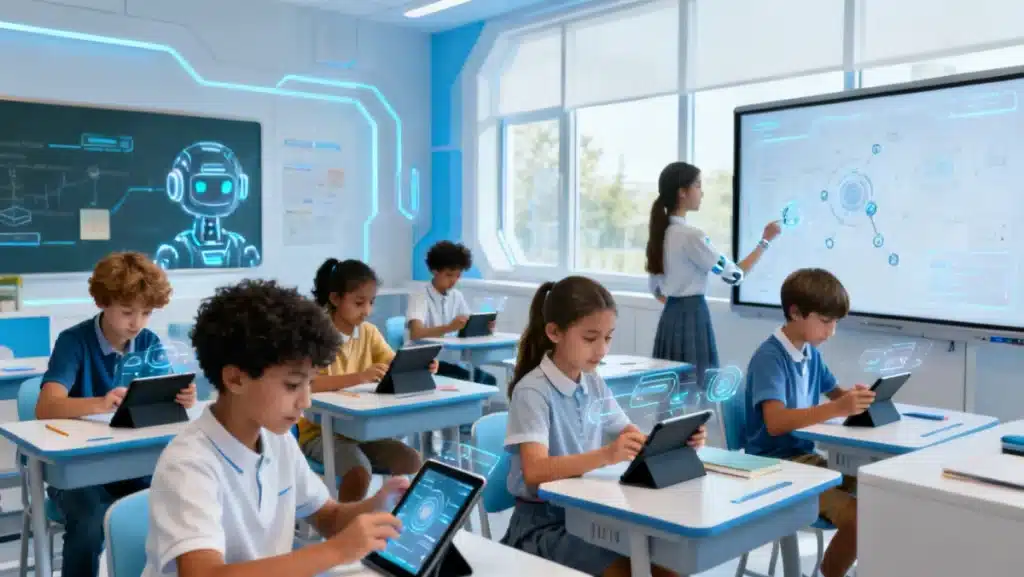
The landscape of education is undergoing an unprecedented transformation, driven by the rapid advancements in Artificial Intelligence (AI). While AI has been a topic of discussion for years, its tangible integration into the K-12 curriculum in the US is no longer a distant dream but a rapidly approaching reality. By 2026, experts predict that AI will not only be a supplementary tool but a fundamental component, ushering in three key educational shifts that will redefine teaching and learning. This article delves into these profound changes, exploring how AI is set to revolutionize personalized learning, adaptive assessments, and the very concept of AI literacy among students and educators.
The promise of AI in education is vast, offering solutions to long-standing challenges such as catering to diverse learning styles, providing immediate feedback, and preparing students for a future dominated by technology. However, its implementation requires careful consideration, strategic planning, and a deep understanding of both its potential and its limitations. The shifts we are about to explore are not merely technological upgrades; they represent a paradigm shift in educational philosophy and practice.
The United States’ K-12 education system, with its diverse student population and varied pedagogical approaches, stands at a critical juncture. The decisions made in the next few years regarding AI integration will shape the educational experiences of millions of children and determine their preparedness for the complex, AI-driven world they will inherit. Therefore, understanding these impending shifts is crucial for policymakers, educators, parents, and students alike.
The Dawn of Hyper-Personalized Learning Pathways
One of the most significant and immediate impacts of AI on the K-12 curriculum will be the widespread adoption of hyper-personalized learning pathways. For decades, educators have strived to meet the individual needs of each student, a monumental task in classrooms with often 20 to 30 or more diverse learners. AI, with its capacity to process vast amounts of data and identify intricate patterns, offers a scalable solution to this challenge, fundamentally altering how students learn and progress.
Understanding Hyper-Personalized Learning
Hyper-personalized learning goes beyond traditional differentiated instruction. It involves AI systems analyzing a student’s learning style, pace, strengths, weaknesses, interests, and even emotional state to curate a unique educational journey. This means:
- Customized Content Delivery: AI algorithms can recommend specific learning materials, videos, interactive simulations, and exercises that are optimally suited to a student’s current understanding and preferred mode of learning. If a student struggles with visual explanations, the AI might prioritize auditory or kinesthetic resources.
- Adaptive Pacing: Students can move through subjects at their own speed. Those who grasp concepts quickly can advance, exploring more complex topics or supplementary material, while those who need more time receive additional support, alternative explanations, and targeted practice without feeling rushed or left behind.
- Dynamic Curriculum Adjustment: The curriculum itself becomes fluid. As a student interacts with the AI, the system continuously updates its understanding of their cognitive profile, adjusting the sequence and difficulty of lessons in real-time. This ensures optimal engagement and prevents both boredom and frustration.
- Interest-Driven Exploration: AI can identify and leverage a student’s innate interests to make learning more engaging. For instance, a student passionate about space might be presented with math problems framed in a celestial context or science lessons related to astrophysics.
Implementation in K-12 Classrooms by 2026
By 2026, we can expect to see AI-powered learning platforms becoming standard in many K-12 schools. These platforms will integrate seamlessly with existing learning management systems (LMS) and provide teachers with powerful new tools. Teachers will transition from being primary content deliverers to facilitators of learning, coaches, and mentors. They will use AI-generated insights to:
- Identify Learning Gaps: AI will quickly pinpoint specific areas where students are struggling, allowing teachers to intervene with targeted support.
- Group Students Strategically: Based on AI analysis, teachers can form dynamic small groups for collaborative projects or direct instruction, ensuring that students receive the most relevant peer and teacher support.
- Focus on Higher-Order Thinking: With AI handling much of the foundational content delivery and basic skill reinforcement, teachers can dedicate more time to fostering critical thinking, creativity, problem-solving, and socio-emotional development.
- Enhance Parent-Teacher Communication: AI systems can provide detailed reports on student progress, making it easier for parents and teachers to understand specific achievements and areas for growth.
The impact of AI K-12 curriculum on personalized learning will be profound, addressing the diverse needs of students in a way that traditional models have struggled to achieve.
The Evolution of Adaptive Assessments and Real-time Feedback
The second major shift brought about by AI in the K-12 curriculum will be the transformation of assessment practices. Traditional, standardized tests, often administered at fixed intervals, provide a snapshot of a student’s knowledge at a single point in time. They often fail to capture the full spectrum of a student’s abilities, learning trajectory, or conceptual understanding. AI-powered adaptive assessments, however, promise a more dynamic, continuous, and insightful approach to evaluating learning.
How Adaptive Assessments Work
Adaptive assessments are not static. Instead, they adjust the difficulty and type of questions in real-time based on a student’s responses. If a student answers correctly, the system presents a more challenging question; if they struggle, it offers easier questions or different modalities to re-evaluate their understanding. This approach offers several significant advantages:
- Precision in Measurement: Adaptive tests can more accurately pinpoint a student’s true level of proficiency, as they are not limited by a fixed set of questions. They can cover a wider range of difficulty levels, providing a more detailed profile of a student’s knowledge.
- Reduced Testing Time: By focusing on questions most relevant to a student’s ability level, adaptive tests can often be shorter than traditional tests while yielding more precise results.
- Reduced Test Anxiety: The adaptive nature can make the testing experience less daunting for students, as they are consistently challenged at an appropriate level rather than being overwhelmed by questions that are too difficult or bored by those that are too easy.
- Formative, Not Just Summative: Unlike summative assessments that merely grade performance, adaptive assessments are inherently formative. They provide continuous data that can immediately inform instructional decisions.
Real-time Feedback and Its Impact
Beyond adaptive questioning, AI systems excel at providing immediate, actionable feedback. This is a game-changer for learning:
- Instant Clarification: When a student makes an error, the AI can immediately explain why it was incorrect, provide hints, or direct them to relevant learning resources. This closes the feedback loop instantly, preventing the reinforcement of misconceptions.
- Targeted Practice: Based on assessment results, AI can automatically generate personalized practice problems or recommend specific modules to address identified weaknesses. This ensures that students are always working on what they need most.
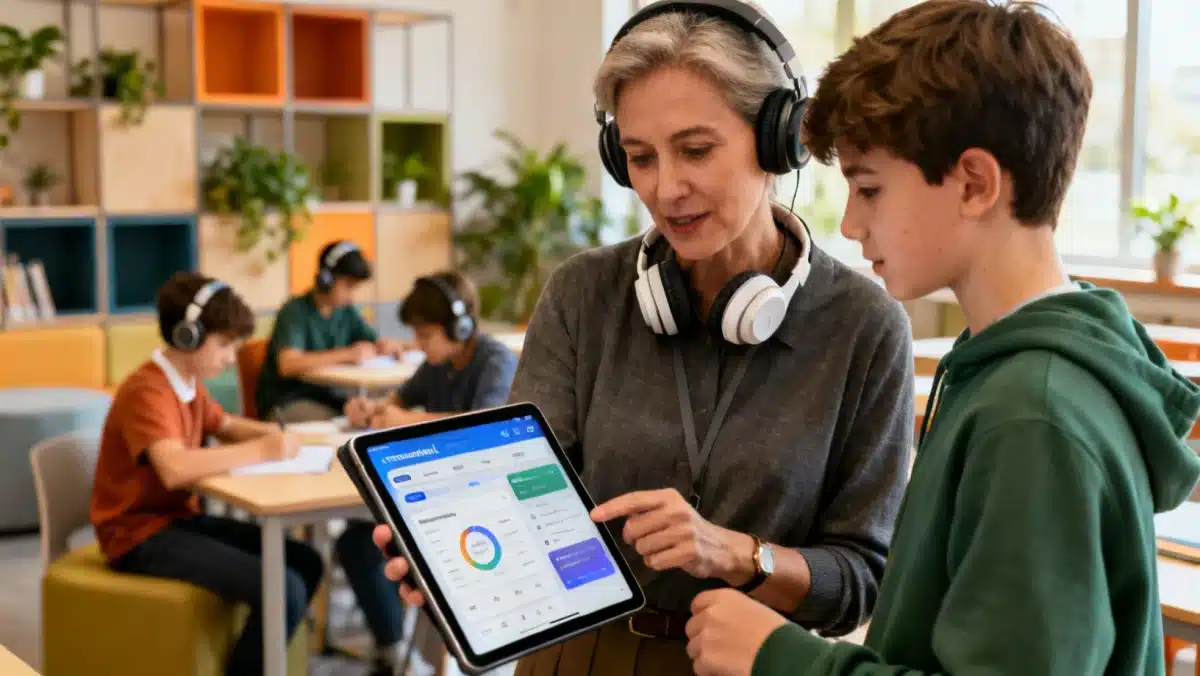
- Teacher Insights: Teachers will receive dashboards with real-time data on student and class performance. These dashboards will highlight common misconceptions, areas where the class as a whole is struggling, and individual student progress, enabling teachers to adjust their lessons and interventions proactively.
- Beyond Multiple Choice: AI is increasingly capable of assessing more complex tasks, such as essays (for grammar, structure, and coherence), coding projects, and even oral presentations (for fluency and content). This expands the scope of what can be efficiently assessed and provides richer feedback.
By 2026, adaptive assessments and real-time feedback will be integral to the AI K-12 curriculum, moving away from high-stakes, infrequent testing towards continuous, low-stakes evaluation that genuinely supports learning.
Fostering AI Literacy: A New Core Competency
The third, and perhaps most critical, shift in the K-12 curriculum by 2026 will be the imperative to foster AI literacy among all students. As AI permeates every aspect of society, understanding its principles, applications, and ethical implications will become as fundamental as reading, writing, and arithmetic. AI literacy is not just about using AI tools; it’s about understanding how they work, their societal impact, and how to interact with them responsibly and effectively.
What is AI Literacy for K-12 Students?
AI literacy for K-12 students encompasses several key areas:
- Understanding AI Concepts: Basic knowledge of what AI is, how it learns (e.g., machine learning, neural networks in simplified terms), and its different forms (e.g., generative AI, predictive AI).
- Ethical Considerations: Discussing the societal implications of AI, including bias, privacy, job displacement, and the importance of responsible AI development and use. This includes critical thinking about AI-generated content and its potential for misinformation.
- Interacting with AI: Learning to effectively use AI tools for research, creativity, problem-solving, and productivity. This includes understanding prompt engineering and how to get the most out of AI assistants.
- Basic AI Creation/Coding: For some, this will involve introductory coding experiences that allow students to build simple AI models or understand the logic behind them, fostering computational thinking.
- Data Literacy: Understanding that AI relies on data, how data is collected, its importance, and the ethical considerations surrounding data privacy and security.
Integrating AI Literacy into the Curriculum
By 2026, AI literacy will not be a standalone elective but will be woven into various subjects across the K-12 spectrum:
- Science and Math: Exploring the algorithms behind AI, data analysis, and the scientific method applied to AI development.
- Social Studies: Discussing the historical and societal impact of technological revolutions, including AI, its role in global economies, and ethical debates.
- Language Arts: Analyzing AI-generated texts, understanding how AI influences communication, and developing critical reading skills to discern AI-produced content.
- Art and Music: Experimenting with AI tools for creative expression, understanding algorithms in generative art and music.
- Computer Science: Deeper dives into AI programming, machine learning concepts, and practical application development.
Educators will also need to develop their own AI literacy to effectively teach these concepts and integrate AI tools into their pedagogy. Professional development will be paramount to ensure teachers are equipped with the knowledge and skills to guide students in this new era.
Challenges and Considerations for AI in K-12 Curriculum
While the benefits of AI in K-12 education are compelling, the path to widespread implementation is not without its challenges. Addressing these proactively will be crucial for successful integration by 2026.
Equity and Access
One of the foremost concerns is ensuring equitable access to AI technologies and the digital infrastructure required to support them. The digital divide, which often mirrors socioeconomic disparities, could exacerbate existing educational inequalities. Schools in underserved communities may lack the funding for necessary hardware, software, and high-speed internet. Furthermore, ensuring that AI-powered tools are culturally responsive and do not perpetuate biases present in their training data is paramount. Developers and educators must work together to ensure AI is a tool for equity, not a further divider.
Teacher Training and Professional Development
The successful integration of AI hinges on the preparedness of educators. Teachers will need extensive professional development not only to understand how to use AI tools effectively in their classrooms but also to adapt their pedagogical approaches to leverage AI’s capabilities. This includes training on managing personalized learning environments, interpreting AI-generated data, and teaching AI literacy concepts. The shift from traditional instruction to AI-facilitated learning requires a significant investment in upskilling the existing teaching workforce.
Data Privacy and Security
AI systems in education will collect vast amounts of student data, from academic performance to learning behaviors and preferences. Protecting this sensitive information is non-negotiable. Robust data privacy policies, secure platforms, and transparent practices regarding data collection and usage are essential. Parents, students, and educators must be assured that personal data is protected from breaches and misused. Compliance with regulations like FERPA (Family Educational Rights and Privacy Act) and other emerging data protection laws will be critical.
Curriculum Development and Standardization
Integrating AI literacy and adapting curricula for personalized learning requires a concerted effort in curriculum development. State and national educational bodies will need to establish guidelines and standards for AI integration, ensuring consistency while allowing for local innovation. This includes deciding what core AI concepts should be taught at each grade level and how these concepts can be seamlessly woven into existing subjects without overwhelming teachers or students.
Ethical AI Use and Bias Mitigation
AI systems are only as unbiased as the data they are trained on. If historical biases exist in the data, the AI may perpetuate or even amplify them. Ensuring that AI tools used in K-12 education are fair, transparent, and free from bias is a significant ethical challenge. Educators and developers must critically evaluate AI algorithms and their outputs, teaching students to do the same. Discussions around algorithmic bias, fairness, and accountability must become a regular part of the AI K-12 curriculum.
Maintaining Human Connection
While AI offers incredible potential for efficiency and personalization, it should never replace the invaluable human element in education. The role of the teacher as a mentor, motivator, and emotional support system remains paramount. AI should augment human instruction, allowing teachers to focus more on the socio-emotional development, critical thinking, and creative aspects of learning that require human interaction and nuanced understanding. Balancing AI’s capabilities with the irreplaceable role of human educators is key to a holistic educational experience.
The Road Ahead: Preparing for 2026 and Beyond
The integration of AI into the K-12 curriculum by 2026 is not merely an option but a necessity to prepare students for a future where AI will be ubiquitous. The three key shifts – hyper-personalized learning, adaptive assessments, and pervasive AI literacy – represent a fundamental reimagining of education.
Achieving this transformation requires a collaborative effort from all stakeholders. Policymakers must create supportive frameworks and allocate resources. Technology developers must design user-friendly, ethical, and effective AI tools tailored for educational contexts. Educators must embrace continuous learning and adapt their practices. Parents need to understand the benefits and implications of AI in their children’s education, and students themselves must engage actively with these new learning modalities.
The future of K-12 education in the US is bright with the promise of AI. By strategically navigating the challenges and harnessing the power of artificial intelligence, we can create a more equitable, engaging, and effective learning environment that truly prepares every student for success in the 21st century and beyond. The journey has begun, and by 2026, the impact of AI K-12 curriculum will be undeniable, shaping a new generation of learners ready for an AI-powered world.