Student Loan Repayment Strategies 2026: Federal Program Adjustments

Adapting to 2026 student loan repayment strategies is essential as recent federal program adjustments reshape monthly payment obligations, demanding informed borrower action for financial stability.
Are you ready to tackle your student loans in the coming year? Navigating
student loan repayment 2026 requires a clear understanding of the latest federal program adjustments and how they will directly impact your monthly payments. This guide aims to demystify these changes, offering actionable strategies to help you manage your debt effectively and confidently.
Understanding the Evolving Federal Landscape for Student Loans
The federal student loan landscape is constantly shifting, and 2026 brings its own set of important updates. These changes are designed to either provide relief or streamline the repayment process, but understanding their nuances is key to leveraging them effectively. Borrowers need to stay informed about these adjustments to ensure they are on the most advantageous repayment path.
Recent years have seen significant reforms, including the introduction of new income-driven repayment (IDR) plans and adjustments to existing ones. These federal program adjustments can dramatically alter your monthly obligations and the total amount you repay over time. For many, these changes represent an opportunity to reduce financial strain, while for others, they might require a re-evaluation of their current strategy.
Key Federal Program Adjustments to Watch
Several federal programs have undergone or are slated for adjustments that will take full effect by 2026. These include modifications to IDR plans, potential changes in interest rate calculations, and revised eligibility requirements for certain relief programs. Staying abreast of these modifications is crucial for effective financial planning.
- SAVE Plan Enhancements: The new Saving on a Valuable Education (SAVE) Plan, which replaced the REPAYE plan, offers more generous terms for many borrowers, including lower discretionary income percentages for undergraduate loans and a shorter repayment period for smaller balances.
- Public Service Loan Forgiveness (PSLF) Updates: While not a new program, PSLF continues to evolve with ongoing administrative improvements aimed at making the forgiveness process more accessible and transparent for eligible public service workers.
- Interest Accrual Changes: Some discussions have revolved around potential adjustments to how interest accrues, particularly for those on IDR plans, aiming to prevent balances from growing even when payments are made.
The implications of these federal adjustments are far-reaching. They can mean lower monthly payments, faster paths to loan forgiveness, or a clearer understanding of your long-term financial commitments. Therefore, a proactive approach to understanding these changes is not just beneficial, but essential for all student loan borrowers.
Analyzing the Impact on Your Monthly Payments
The direct effect of federal program adjustments often boils down to one critical factor: your monthly payment. For many borrowers, the goal is to reduce this burden, freeing up funds for other essential expenses or savings. Understanding how these changes translate into actual dollar amounts is the first step towards optimizing your repayment strategy.
Income-driven repayment plans, in particular, are designed to make payments more manageable by tying them to your income and family size. With recent adjustments, such as those within the SAVE Plan, more of your income is protected, potentially leading to significantly lower monthly payments for eligible individuals. This can provide much-needed breathing room in your budget.
Calculating Your New Payment Under SAVE
The SAVE Plan, fully implemented by July 2024 but impacting 2026 strategies, calculates discretionary income differently than previous IDR plans. Instead of 150% of the poverty line, it protects 225% of the poverty line, meaning a larger portion of your income is exempt from payment calculations. Furthermore, payments on undergraduate loans are reduced from 10% to 5% of discretionary income.
- Increased Income Protection: More of your income is considered non-discretionary, leading to a lower calculated discretionary income.
- Lower Payment Percentage: For undergraduate loans, the percentage of discretionary income used for payments is halved.
- Interest Subsidy: If your monthly payment doesn’t cover the interest, the government covers the remaining interest, preventing your balance from growing.
To assess the precise impact, borrowers should utilize the Federal Student Aid website’s Loan Simulator tool. This tool allows you to input your specific loan details, income, and family size to estimate your new monthly payment under various plans, including the SAVE Plan. This personalized calculation is invaluable for making informed decisions about your repayment strategy.
Exploring New and Updated Repayment Strategies
With the federal landscape evolving, so too must your repayment approach. Beyond simply accepting your current plan, 2026 offers opportunities to explore new and updated strategies that could save you money, shorten your repayment timeline, or provide greater flexibility. It’s about finding the best fit for your unique financial situation.
Many borrowers default to standard repayment plans, which often come with higher monthly payments but a shorter overall term. However, for those struggling or seeking more flexibility, exploring income-driven options or even refinancing could be more beneficial. The key is to actively research and compare all available avenues.
Optimizing Your Repayment Path
Optimizing your repayment path involves a careful consideration of your financial goals, current income, and future earning potential. It’s not a one-size-fits-all solution, but rather a tailored approach that aligns with your broader financial plan. This might mean adjusting your current repayment plan or exploring consolidation.
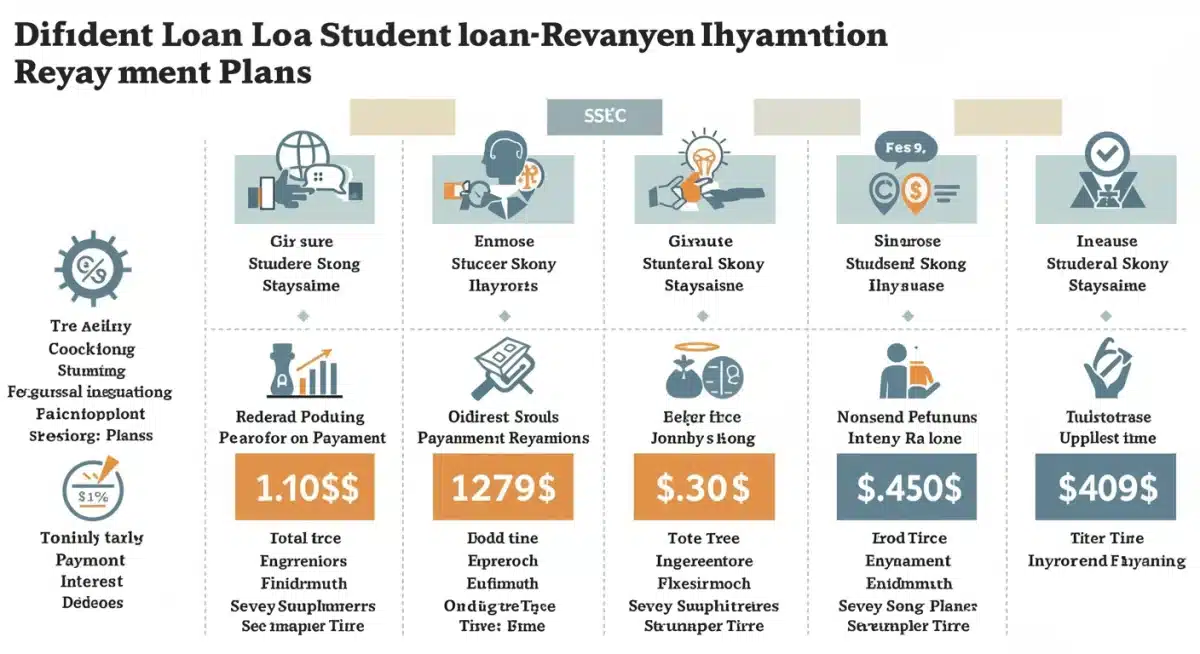
- Re-evaluating IDR Plans: If you’re currently on an IDR plan, ensure it’s still the most beneficial one, especially with the introduction of the SAVE Plan. Annual recertification is crucial.
- Loan Consolidation: Federal loan consolidation can simplify your payments by combining multiple federal loans into one, potentially lowering your monthly payment by extending the repayment term. It can also make you eligible for certain IDR plans or PSLF.
- Aggressive Repayment: If your financial situation allows, consider making extra payments to reduce your principal balance faster, thus saving on interest over the life of the loan.
The best strategy is one that you can consistently adhere to while working towards your financial independence. Regularly reviewing your options, especially as federal programs evolve, ensures you’re always on the most advantageous path for your student loan repayment.
Eligibility and Enrollment for Federal Programs
Accessing the benefits of federal student loan programs hinges on understanding their specific eligibility requirements and the enrollment process. It’s not enough to know a program exists; you must meet its criteria and complete the necessary paperwork accurately and on time. Missteps here can delay or even prevent you from utilizing valuable relief options.
Each federal program, whether an income-driven repayment plan or a forgiveness initiative, has distinct conditions for participation. These can relate to your loan type, income level, employment, or even the date you took out your loans. Verifying your eligibility is the critical first step before attempting to enroll.
Navigating the Enrollment Process
The enrollment process for federal student loan programs typically involves submitting an application to your loan servicer or directly through the Federal Student Aid website. This often requires providing documentation to verify your income, family size, or employment status. Attention to detail is paramount to avoid processing delays.
- Gather Necessary Documentation: Before applying, collect all relevant documents, such as tax returns, pay stubs, and proof of employment for PSLF.
- Utilize the Federal Student Aid Website: The official FSA website is the primary hub for information, applications, and tools like the Loan Simulator.
- Contact Your Loan Servicer: Your loan servicer can provide personalized guidance, answer specific questions about your loans, and help you navigate the application process.
Annual recertification is a common requirement for many income-driven repayment plans. Failing to recertify on time can lead to your payments reverting to the standard plan, potentially increasing your monthly obligation significantly. Setting reminders and preparing your documents in advance can help ensure a smooth recertification process each year.
Long-Term Financial Planning with Student Debt
Managing student loan debt is not just about making monthly payments; it’s an integral part of your larger long-term financial plan. How you approach your student loans can impact your ability to save for retirement, buy a home, or pursue other significant financial goals. Therefore, integrating student loan repayment into your holistic financial strategy is essential.
For many, student loans represent a substantial financial obligation that can stretch over decades. By proactively planning, you can minimize the overall cost of your loans and ensure they don’t unduly hinder your progress towards financial independence. This involves looking beyond the immediate monthly payment and considering the long-term implications.
Integrating Loans into Your Financial Strategy
Effective long-term financial planning with student debt involves several key considerations, from budgeting and saving to investment strategies. The goal is to balance debt repayment with other financial priorities to achieve overall financial health.
- Budgeting for Loans: Incorporate your student loan payments into a comprehensive budget, ensuring you can meet your obligations consistently without sacrificing other necessities.
- Emergency Fund: Build and maintain an emergency fund to cover unexpected expenses, preventing you from defaulting on loans if your income is disrupted.
- Retirement Savings: Even with student debt, it’s crucial to contribute to retirement accounts. The power of compounding interest means that early contributions can make a significant difference over time.
- Debt Snowball/Avalanche: If you have multiple debts, consider strategies like the debt snowball (paying off smallest debt first) or debt avalanche (paying off highest interest debt first) to gain momentum in debt reduction.
Considering the potential for loan forgiveness programs, such as PSLF or IDR forgiveness after 20 or 25 years, can also be a part of your long-term plan. While these paths require consistent adherence to specific criteria, they can offer significant relief down the line. A financial advisor can provide personalized guidance on how best to integrate your student loan strategy into your broader financial goals.
Resources and Tools for Informed Decision-Making
Making informed decisions about your student loan repayment requires access to reliable resources and effective tools. Fortunately, there are numerous government-backed and independent platforms designed to help borrowers navigate the complexities of student debt. Leveraging these resources can empower you to choose the best path forward.
From official government websites to non-profit organizations, a wealth of information is available to help you understand your options, calculate potential payments, and connect with expert advice. Avoiding misinformation and relying on credible sources is paramount in this process.
Essential Tools and Websites
Several key resources stand out as indispensable for any student loan borrower looking to manage their debt effectively in 2026 and beyond. These tools provide accurate, up-to-date information and practical functionalities.
- Federal Student Aid (StudentAid.gov): This is the official source for federal student loan information. It offers the Loan Simulator, details on all federal repayment plans, and application forms.
- Your Loan Servicer’s Website: Your servicer’s portal provides specific information about your loans, payment history, and options for changing repayment plans or deferment/forbearance.
- Consumer Financial Protection Bureau (CFPB): The CFPB offers impartial financial advice and tools, including resources on student loans and how to handle disputes with servicers.
Beyond these primary resources, financial literacy websites and non-profit credit counseling agencies can offer additional support and educational materials. Remember, the goal is to equip yourself with the knowledge and tools necessary to make confident decisions about your student loan repayment strategy, ensuring financial well-being well into 2026 and beyond.
| Key Aspect | Brief Description |
|---|---|
| Federal Program Adjustments | Understanding new rules like the SAVE Plan and PSLF updates is crucial for borrowers in 2026. |
| Monthly Payment Impact | Changes can significantly lower payments by protecting more income and reducing discretionary income percentages. |
| Repayment Strategy Optimization | Re-evaluating IDR plans, considering consolidation, or aggressive repayment can optimize your path. |
| Key Resources & Tools | Utilize StudentAid.gov and loan servicer websites for accurate information and payment simulators. |
Frequently Asked Questions About Student Loan Repayment in 2026
The SAVE Plan (Saving on a Valuable Education) replaces the REPAYE Plan, offering lower monthly payments for many borrowers. It protects more of your income from payment calculations and reduces payments on undergraduate loans to 5% of discretionary income, helping prevent your balance from growing due to unpaid interest.
The Public Service Loan Forgiveness (PSLF) program continues to undergo administrative improvements to simplify the process. While eligibility requirements remain, efforts are being made to streamline the application and tracking of qualifying payments, potentially making it more accessible and transparent for public service workers.
The most accurate way is to use the Loan Simulator tool on the Federal Student Aid (StudentAid.gov) website. You can input your loan details, income, and family size to compare various repayment plans, including the SAVE Plan, and estimate your new monthly payment.
Under the new SAVE Plan, if your monthly payment doesn’t cover the interest, the government covers the remaining interest, preventing your balance from growing. If you’re on a different IDR plan and your balance is increasing, consider switching to the SAVE Plan or contacting your servicer for options.
Federal loan consolidation can be beneficial as it combines multiple federal loans into one, potentially offering a single, lower monthly payment and making you eligible for certain IDR plans or PSLF. However, it might extend your repayment term, increasing total interest paid. Evaluate carefully with the Loan Simulator.
Conclusion
Navigating student loan repayment 2026 requires diligence and an informed approach, especially with the ongoing federal program adjustments. By actively understanding the changes, analyzing their impact on your monthly payments, and exploring new repayment strategies, you can effectively manage your student debt. Utilize the available resources and tools to make confident decisions that align with your long-term financial goals, ensuring a more stable and secure financial future.