Maximize Your 401(k) in 2025: Reduce Taxable Income by $2,000

Maximizing your 401(k) contributions in 2025 is a powerful strategy to significantly reduce your taxable income and bolster retirement savings, potentially saving you up to $2,000 or more on taxes.
Are you looking to significantly boost your retirement savings while simultaneously cutting down on your tax bill? Understanding how to strategically approach Maximizing Your 401(k) Contributions in 2025: An Insider’s Guide to Reducing Your Taxable Income by up to $2,000 is paramount for savvy investors and future retirees alike. This guide will walk you through the essential steps and insights to make the most of your 401(k) in the coming year.
Understanding 401(k) Basics and 2025 Limits
Before diving into advanced strategies, it’s crucial to have a firm grasp of what a 401(k) is and the expected contribution limits for 2025. A 401(k) is a retirement planning savings plan sponsored by an employer, allowing employees to save and invest for retirement on a tax-deferred basis. This means that contributions and earnings grow tax-free until withdrawal in retirement.
The Internal Revenue Service (IRS) typically adjusts 401(k) contribution limits annually to account for inflation. While the official 2025 limits are usually announced later in the year, financial experts often project these figures based on current economic trends. These limits are critical because they define how much you can contribute from your paycheck, directly impacting your taxable income.
Projected 2025 Contribution Limits
- Employee Contribution Limit: This is the maximum amount an individual can contribute from their salary to a 401(k). For 2024, this limit was $23,000. For 2025, it is anticipated to increase slightly, potentially reaching around $24,000 to $24,500 due to inflation.
- Catch-Up Contributions: If you are age 50 or older, you are eligible to make additional catch-up contributions. The 2024 catch-up limit was $7,500. For 2025, this amount could also see a modest increase, offering even greater savings potential for older workers.
- Total Contribution Limit: This includes contributions from both the employee and the employer (matching or profit-sharing). The overall limit for 2024 was $69,000, or $76,500 if including catch-up contributions. Expect these figures to also rise for 2025, providing a larger umbrella for total retirement savings.
Understanding these limits is the first step in crafting an effective strategy. By maximizing your contributions up to these thresholds, you directly reduce your current year’s taxable income dollar-for-dollar for pre-tax 401(k) contributions. This immediate tax benefit is one of the most compelling reasons to prioritize your 401(k) savings.
The Direct Impact on Your Taxable Income
One of the most attractive features of a traditional 401(k) is its ability to reduce your current taxable income. When you contribute to a traditional 401(k), those contributions are deducted from your gross income before taxes are calculated. This means you pay taxes on a lower income amount, leading to immediate tax savings.
Consider an individual in the 22% federal income tax bracket. If this person contributes an additional $2,000 to their 401(k), their taxable income is reduced by $2,000. At a 22% tax rate, this translates to an immediate tax saving of $440 ($2,000 * 0.22). This is a tangible benefit that can significantly impact your take-home pay or allow you to allocate those savings elsewhere.
Illustrating Tax Savings
The magnitude of your tax savings depends on your marginal tax bracket. Higher earners in higher tax brackets will see a greater dollar amount saved for every dollar contributed. For example, someone in the 24% bracket would save $480 on a $2,000 contribution, while someone in the 32% bracket would save $640. These savings accumulate year after year, making consistent maximum contributions a powerful financial tool.
Beyond federal income taxes, 401(k) contributions can also reduce your state income tax burden in many states. This dual benefit further amplifies the financial advantage of maximizing your contributions. It’s not just about saving for retirement; it’s about optimizing your current financial situation by intelligently managing your tax obligations.
Strategies for Maximizing Your Contributions
While understanding the benefits is important, implementing strategies to actually reach those maximum contribution limits is where the real work begins. Many people find it challenging to contribute the full amount, but with careful planning and consistent effort, it is achievable. The goal is to make contributions a seamless part of your financial routine.
Automate Your Savings
- Set it and Forget it: The easiest way to ensure consistent contributions is to automate them. Work with your HR department or plan administrator to set up automatic payroll deductions that align with your desired contribution amount.
- Incremental Increases: If you can’t max out immediately, commit to increasing your contribution percentage by at least 1% or 2% each year, especially when you receive a raise. This gradual approach makes it less noticeable in your budget while steadily building your savings.
- Utilize Employer Match: Always contribute at least enough to capture your employer’s full matching contribution. This is essentially free money and a guaranteed return on your investment. Failing to do so means leaving significant money on the table.
Another effective strategy involves reallocating unexpected windfalls. Did you receive a bonus, a tax refund, or an inheritance? Consider directing a portion of this extra income directly into your 401(k) if your plan allows for lump-sum contributions or if you can adjust your payroll deductions for the remainder of the year. This can be a quick way to significantly boost your annual contribution without impacting your regular budget.
Catch-Up Contributions: A Boon for Older Workers
For individuals approaching retirement age, catch-up contributions offer a significant advantage. Once you turn 50, the IRS allows you to contribute an additional amount to your 401(k) beyond the standard employee contribution limit. This provision is specifically designed to help older workers who may not have saved enough earlier in their careers or who simply want to accelerate their retirement savings.
As mentioned, the catch-up contribution limit for 2024 was $7,500, and it is expected to be similar or slightly higher in 2025. This means that if the standard employee limit is $24,000 in 2025, an individual aged 50 or older could contribute a total of $31,500 ($24,000 + $7,500) to their 401(k). This additional saving capacity can make a substantial difference in retirement readiness.
Maximizing Catch-Up Savings
- Prioritize Early: Don’t wait until the end of the year to start making catch-up contributions. Begin as soon as you turn 50 to maximize the time your additional funds have to grow.
- Review Budget: Evaluate your current budget to see where you can free up funds for these extra contributions. Even small, consistent increases can add up over time.
- Consult an Advisor: A financial advisor can help you integrate catch-up contributions into your broader retirement plan, ensuring it aligns with your overall financial goals and tax strategy.
The tax benefits of catch-up contributions are identical to regular 401(k) contributions: they reduce your current taxable income. For an individual in a higher tax bracket, this can lead to substantial immediate tax savings while simultaneously building a larger nest egg for retirement. It’s a win-win scenario that should be fully utilized by eligible individuals.
Navigating Traditional vs. Roth 401(k) Options
Many employers offer both traditional and Roth 401(k) options. While both are excellent retirement vehicles, they differ significantly in their tax treatment, and understanding these differences is crucial for maximizing your long-term financial benefits. Your choice between a traditional and Roth 401(k) can impact when you receive your tax break.
A traditional 401(k), as discussed, offers an upfront tax deduction on your contributions, reducing your current taxable income. Your investments grow tax-deferred, and you pay taxes on withdrawals in retirement. This is ideal if you expect to be in a lower tax bracket in retirement than you are now.
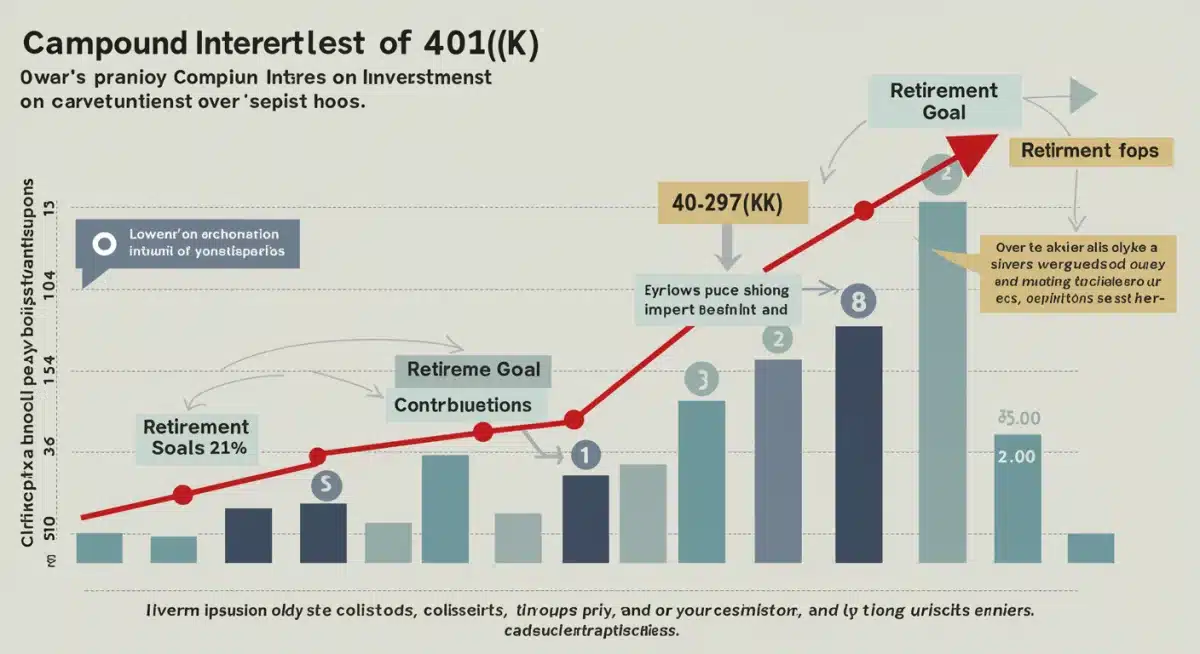
Conversely, a Roth 401(k) does not offer an upfront tax deduction. Contributions are made with after-tax dollars, meaning they do not reduce your current taxable income. However, the significant advantage of a Roth 401(k) is that qualified withdrawals in retirement are entirely tax-free. This is particularly beneficial if you anticipate being in a higher tax bracket during retirement or if you simply prefer to pay your taxes now rather than later.
Making the Right Choice for Your Situation
- Current vs. Future Tax Brackets: If you believe your tax bracket will be lower in retirement, a traditional 401(k) is likely more advantageous due to the immediate tax deduction. If you expect your tax bracket to be higher, a Roth 401(k) could be the better choice for tax-free withdrawals.
- Diversify Tax Treatment: Some individuals choose to contribute to both a traditional and a Roth 401(k) if their plan allows. This strategy provides tax diversification, giving you flexibility in retirement to withdraw from either account depending on your tax situation at that time.
- Income Restrictions: Unlike Roth IRAs, there are no income limitations for contributing to a Roth 401(k). This makes it an attractive option for high-income earners who are phased out of direct Roth IRA contributions.
The decision between a traditional and Roth 401(k) should be carefully considered based on your individual financial situation, current income, and projections for your retirement income and tax bracket. Consulting a financial advisor can provide personalized guidance to ensure you make the most informed decision.
Beyond Contributions: Investment Strategies within Your 401(k)
Maximizing your 401(k) isn’t just about how much you contribute; it’s also about how effectively those contributions are invested. The investment choices you make within your 401(k) can significantly impact the growth of your retirement nest egg. Many 401(k) plans offer a range of investment options, from target-date funds to individual mutual funds and exchange-traded funds (ETFs).
A common mistake is to set up contributions and then forget about the underlying investments. Regularly reviewing and adjusting your portfolio is crucial. Your risk tolerance, time horizon until retirement, and overall financial goals should guide your investment decisions. As you get closer to retirement, you might consider shifting towards more conservative investments to protect your accumulated wealth.
Key Investment Considerations
- Diversification: Ensure your portfolio is well-diversified across different asset classes (stocks, bonds, real estate, etc.) to mitigate risk.
- Expense Ratios: Pay close attention to the expense ratios of the funds you choose. High fees can eat away at your returns over time. Opt for low-cost index funds or ETFs when available.
- Rebalancing: Periodically rebalance your portfolio to maintain your desired asset allocation. This typically involves selling assets that have performed well and buying those that have underperformed to bring your portfolio back into alignment.
Target-date funds are a popular option for those who prefer a hands-off approach. These funds automatically adjust their asset allocation over time, becoming more conservative as you approach your target retirement date. While convenient, it’s still wise to understand their underlying holdings and expense ratios. Ultimately, an informed investment strategy within your 401(k) is just as vital as maximizing your contributions.
Employer Match and Other Benefits
One of the most compelling reasons to participate in a 401(k) plan, especially for those looking to maximize their contributions, is the employer matching contribution. Many employers offer to match a portion of their employees’ contributions, often up to a certain percentage of their salary. This is essentially free money that significantly boosts your retirement savings without requiring additional contributions from your own pocket.
For instance, an employer might match 50% of your contributions up to 6% of your salary. If you earn $60,000 annually and contribute 6% ($3,600), your employer would contribute an additional $1,800. This effectively gives you a 50% immediate return on your initial $3,600 investment. Failing to contribute enough to receive the full employer match means leaving a substantial amount of money on the table, money that could be growing for your retirement.
Additional 401(k) Perks
- Vesting Schedules: Understand your employer’s vesting schedule. This dictates when you gain full ownership of the employer’s contributions. Some plans have immediate vesting, while others require several years of employment.
- Loan Options: Many 401(k) plans allow you to borrow against your account balance. While generally not recommended as a first resort, it can be an option for emergencies, though it comes with risks and interest payments.
- Hardship Withdrawals: In severe financial hardship, some plans permit withdrawals. However, these often come with penalties and tax implications, making them a last resort.
Beyond the direct financial benefits, participating in a 401(k) fosters financial discipline and encourages long-term planning. It’s a structured way to ensure you’re consistently saving for your future, taking advantage of tax benefits and employer incentives. Regularly review your benefits package to ensure you’re fully leveraging all aspects of your 401(k) plan.
| Key Strategy | Brief Description |
|---|---|
| Understand 2025 Limits | Familiarize yourself with the projected employee and catch-up contribution limits for 2025 to plan your savings effectively. |
| Automate Contributions | Set up automatic payroll deductions and consider incremental increases to consistently reach your maximum contribution goals. |
| Utilize Employer Match | Always contribute at least enough to receive your full employer matching contribution, which is essentially free money. |
| Consider Roth vs. Traditional | Evaluate your current and future tax brackets to decide between pre-tax traditional 401(k) or after-tax Roth 401(k) for optimal tax benefits. |
Frequently Asked Questions About 401(k) Maximization
While official limits are announced later in the year, financial experts project the employee contribution limit for 2025 to be around $24,000 to $24,500. Catch-up contributions for those aged 50 and older are also expected to see a slight increase from the 2024 limit of $7,500.
Contributions to a traditional 401(k) are made with pre-tax dollars. This means the amount you contribute is subtracted from your gross income before taxes are calculated, effectively lowering your taxable income for the current year and resulting in immediate tax savings.
Catch-up contributions allow individuals aged 50 and over to contribute an additional amount to their 401(k) beyond the standard limit. This helps older workers boost their retirement savings more aggressively and further reduces their current taxable income.
The choice depends on your tax outlook. A traditional 401(k) offers an upfront tax deduction, ideal if you expect lower taxes in retirement. A Roth 401(k) uses after-tax contributions but provides tax-free withdrawals in retirement, beneficial if you anticipate higher taxes later.
The employer match is critically important as it’s essentially free money. By contributing at least enough to receive the full match, you significantly boost your retirement savings without additional personal cost, offering an immediate and guaranteed return on your investment.
Conclusion
Successfully Maximizing Your 401(k) Contributions in 2025: An Insider’s Guide to Reducing Your Taxable Income by up to $2,000 is an achievable and highly rewarding financial endeavor. By understanding the projected limits, automating your savings, taking full advantage of employer matching, and making informed decisions between traditional and Roth options, you can significantly enhance your retirement security while also realizing immediate tax benefits. Proactive planning and consistent effort are key to building a robust financial future and ensuring you don’t leave potential savings on the table. Start today by reviewing your current contributions and setting a strategy to optimize your 401(k) for the coming year.