FICO Score 10 Changes: Lending Rates & Your Credit in 2026
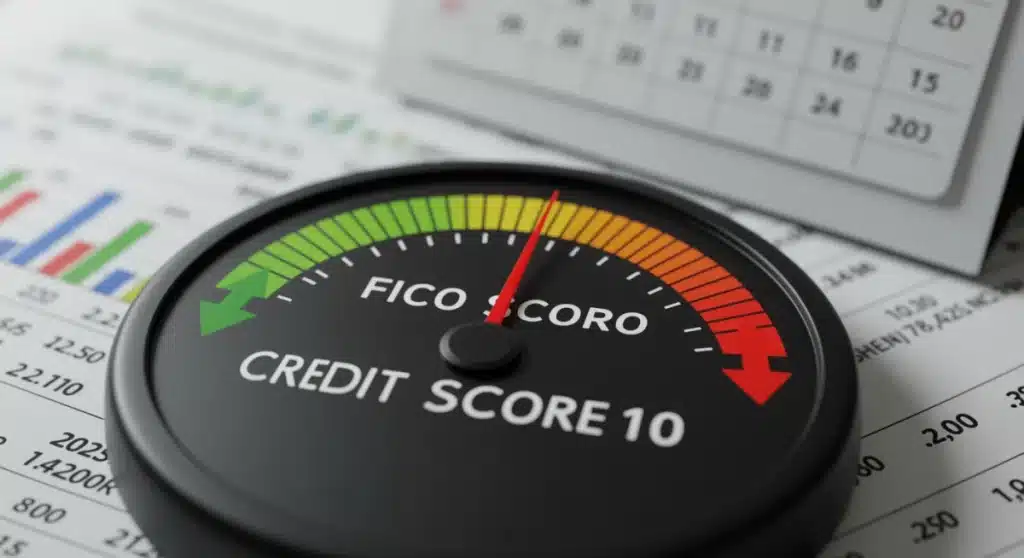
The upcoming FICO Score 10 changes in 2026 will introduce new calculations that could shift credit scores by up to 20 points, directly impacting eligibility and interest rates for loans and credit products.
Understanding the New FICO Score 10 Changes: How a 20-Point Shift Can Affect Your Lending Rates in 2026 is crucial for anyone navigating the financial landscape. These upcoming adjustments promise to redefine how lenders assess creditworthiness, potentially leading to significant impacts on your ability to secure loans and the interest rates you’ll pay.
The evolution of FICO scores and FICO Score 10
FICO scores have long been the backbone of credit assessment in the United States, providing a standardized measure of a consumer’s credit risk. Over the years, FICO has regularly updated its scoring models to adapt to evolving economic conditions and consumer borrowing behaviors. These updates aim to provide lenders with a more accurate and predictive tool for evaluating risk. Each new iteration refines the algorithms, often incorporating new data points or adjusting the weighting of existing factors. This continuous evolution ensures that FICO scores remain relevant and effective in a dynamic financial world.
The introduction of FICO Score 10 and its variant, FICO Score 10 T (T for trending data), represents a significant leap forward in this ongoing evolution. Unlike previous models that primarily focused on a snapshot of your credit history, FICO Score 10 T will incorporate a more dynamic view of your financial behavior. This means looking at trends over time, such as how your debt levels have changed over the past 24 months, rather than just your current balances. This shift is designed to offer a more nuanced understanding of a borrower’s financial habits and stability, moving beyond static data to analyze patterns.
Key differences from previous FICO models
- Trending data: FICO Score 10 T considers how balances and payment amounts have changed over time.
- Greater emphasis on personal loan management: How consumers manage personal loans, especially those used for debt consolidation, will be scrutinized more closely.
- Refined risk assessment: Enhanced algorithms aim to provide a more precise prediction of credit default.
These changes are not merely cosmetic; they reflect a deeper analytical approach. The emphasis on trending data means that consistent, positive financial habits will be rewarded more significantly. Conversely, patterns of increasing debt or inconsistent payments could have a more pronounced negative effect. Understanding these foundational shifts is the first step in preparing for the impact of FICO Score 10.
Understanding the potential 20-point shift
One of the most talked-about aspects of the new FICO Score 10 model is the potential for a 20-point swing in credit scores. This isn’t a guaranteed change for everyone, but rather an indication of the magnitude of adjustment some consumers might experience. A 20-point shift, whether up or down, can have substantial implications for your financial life. For some, it could mean the difference between qualifying for a mortgage or being denied. For others, it might translate into thousands of dollars saved or spent over the life of a loan due to varying interest rates.
This potential volatility stems from the model’s new emphasis on trending data. If your credit history shows a consistent pattern of reducing debt and making payments on time, you might see an increase in your score. This reward for positive trends is a core feature of FICO Score 10 T. However, if your history indicates rising debt levels, particularly revolving credit balances, or a pattern of missed payments, your score could decline. The model is designed to identify and penalize riskier borrowing behaviors more effectively.
Factors influencing score changes
- Debt accumulation trends: Consistent increases in credit card balances could negatively impact your score.
- Payment consistency: A strong history of on-time payments, especially over longer periods, will be highly favorable.
- Personal loan utilization: How you manage personal loans, particularly if they are used for debt consolidation, will be weighed.
The 20-point shift highlights the importance of proactive credit management. Consumers who monitor their credit reports and actively work to improve their financial habits are more likely to benefit from the new model. This shift underscores that credit scores are not static numbers but dynamic reflections of ongoing financial behavior, and FICO Score 10 aims to capture that dynamism more fully.
How FICO Score 10 impacts lending rates in 2026
The direct correlation between your FICO score and the interest rates you receive on loans is undeniable. When FICO Score 10 becomes widely adopted by lenders in 2026, this relationship will become even more pronounced. A higher credit score typically translates to lower interest rates, as lenders view you as a less risky borrower. Conversely, a lower score often results in higher rates, or even denial of credit, to compensate for the perceived increased risk.
With the potential for a 20-point shift, a seemingly small change in your score can lead to a significant difference in the total cost of borrowing. For example, on a large loan like a mortgage or an auto loan, even a half-percentage point difference in interest can amount to thousands of dollars over the loan’s term. This makes understanding and optimizing your FICO Score 10 more critical than ever, as it directly influences your purchasing power and long-term financial health.
Lenders use FICO scores to set the terms of various credit products, including mortgages, auto loans, personal loans, and credit cards. The new model’s ability to identify risk more accurately means that the rates offered will be more finely tuned to individual credit profiles. This could lead to a more competitive lending market for those with excellent credit, while those with declining scores may find themselves facing more stringent terms.
Examples of rate impacts
- Mortgages: A higher score can secure the lowest available interest rates, saving tens of thousands over 30 years.
- Auto loans: Even a modest increase in score can reduce monthly payments significantly.
- Credit cards: Better scores can unlock cards with lower APRs and more favorable rewards programs.
The bottom line is that your FICO Score 10 will be a powerful determinant of your financial opportunities. Preparing for these changes by improving your credit health can directly lead to more favorable lending rates and greater financial flexibility.
Key factors that will influence your FICO Score 10
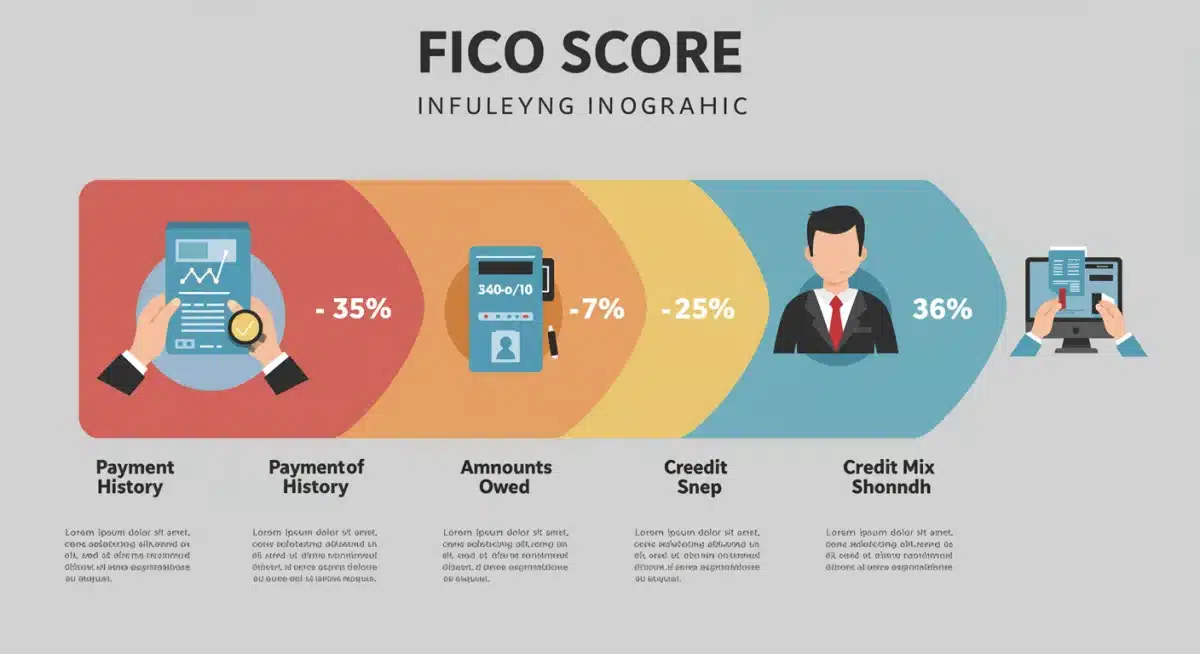
While the core components of FICO scoring remain, FICO Score 10 introduces nuanced changes that will shift the weight given to various credit behaviors. Understanding these key factors is essential for managing your score effectively. Your payment history continues to be the most influential factor, emphasizing the importance of paying all your bills on time, every time. Late payments, especially recent ones, will still significantly harm your score.
Amounts owed, or credit utilization, is another critical component. This refers to the amount of credit you’re using compared to your total available credit. Keeping your utilization low, ideally below 30% on revolving accounts, is generally recommended. FICO Score 10 T, however, will delve deeper into the trends of your utilization. A consistent pattern of high utilization, even if you pay it down periodically, might be viewed less favorably than a consistent pattern of low utilization.
New emphasis on trending data
The most significant innovation in FICO Score 10 T is its focus on trending data. This means the model will analyze your credit history over the past 24 months to identify patterns in your borrowing and repayment habits. This includes:
- Balance trends: Are your credit card balances generally increasing or decreasing over time?
- Payment amounts: Are you consistently paying more than the minimum due, or just scraping by?
- Credit inquiries: How often are you applying for new credit and how does that trend over time?
These trending insights allow FICO Score 10 to differentiate between consumers who temporarily increase their debt but quickly pay it down, versus those who are consistently increasing their debt load. The length of your credit history, new credit, and the mix of credit types you possess also remain important, though their weight might be subtly adjusted to accommodate the trending data analysis. Adapting your financial habits to align with these emphasized factors will be vital for maintaining a strong FICO Score 10.
Strategies to improve your FICO Score 10 before 2026
Proactive credit management is your best defense and offense as FICO Score 10 rolls out. The earlier you start implementing sound financial strategies, the better positioned you’ll be to benefit from the new scoring model or mitigate any potential negative impacts. A fundamental strategy that remains paramount is consistent on-time payments. Every payment, from credit cards to utility bills, contributes to your payment history, which is the most heavily weighted factor in all FICO models.
Reducing your credit utilization is another powerful way to boost your score. Aim to keep your revolving credit balances well below 30% of your available credit. If you have multiple credit cards, consider focusing on paying down the ones with the highest balances first, or spreading your payments across all cards to keep individual utilization rates low. Remember, FICO Score 10 T will analyze the trend of your utilization, so consistent efforts to keep balances low over time will yield the best results.
Actionable steps for credit optimization
- Review your credit reports regularly: Check for errors and dispute any inaccuracies. You can get free copies annually from AnnualCreditReport.com.
- Pay down high-interest debt: Focus on reducing balances, especially on credit cards, to lower utilization and improve trends.
- Avoid opening too many new credit accounts: Each new application can result in a hard inquiry, which can temporarily lower your score.
- Maintain a healthy credit mix: A combination of revolving credit (credit cards) and installment loans (mortgage, auto loan) can be beneficial, but only if managed responsibly.
Furthermore, if you’re considering a personal loan for debt consolidation, be mindful of how it’s reported and managed. While it can be a useful tool, FICO Score 10 will scrutinize how effectively you use it to reduce overall debt, rather than just shifting it around. By adopting these strategies, you can actively work towards a higher FICO Score 10 and secure better lending rates in the future.
The broader financial implications for consumers and lenders
The widespread adoption of FICO Score 10 in 2026 will bring substantial changes not only for individual consumers but also for the entire lending industry. For consumers, the implications extend beyond just interest rates. It will influence access to various financial products, from renting an apartment to obtaining insurance, as FICO scores are often used in these decisions as well. A more precise risk assessment model means that those with strong, consistent financial habits will likely find it easier and more affordable to access credit, furthering their financial goals.
Conversely, individuals with less stable credit histories or those who exhibit patterns of increasing debt might face greater challenges. They could encounter higher barriers to entry for loans, receive less favorable terms, or even be denied credit more frequently. This highlights the growing importance of financial literacy and proactive credit management in an environment where credit scores are becoming even more sophisticated and influential.
Impacts across the financial ecosystem
- For consumers: Enhanced rewards for responsible credit management; potential challenges for those with volatile financial histories.
- For lenders: More accurate risk assessment, potentially leading to fewer defaults and more tailored product offerings.
- Market dynamics: Could lead to a more segmented lending market, with clearer distinctions between low-risk and high-risk borrowers.
Lenders, too, will need to adapt. FICO Score 10 offers them a more robust tool for identifying credit risk, which can lead to more efficient lending practices and potentially lower default rates. However, it also requires them to adjust their underwriting models and potentially their product offerings to align with the new scoring nuances. Ultimately, FICO Score 10 aims to create a more transparent and fair lending environment, rewarding consistent financial responsibility and providing clearer signals of risk.
Preparing for the future: long-term credit health
As we approach 2026, preparing for the FICO Score 10 changes is about more than just short-term fixes; it’s about cultivating long-term credit health. Building and maintaining a strong credit score is an ongoing process that requires discipline and consistent attention. This means not just focusing on immediate debt reduction, but establishing sustainable financial habits that will serve you well for years to come, regardless of future FICO model updates.
One key aspect of long-term credit health is understanding the impact of significant financial decisions. Before taking on new debt, consider how it will affect your credit utilization and your overall debt-to-income ratio. Regularly review your financial goals and adjust your spending and saving habits accordingly. This holistic approach ensures that your credit score is a true reflection of your financial stability and responsibility.
Pillars of sustainable credit health
- Budgeting and expense tracking: Understand where your money goes to prevent overspending and debt accumulation.
- Emergency fund: A robust savings cushion can prevent reliance on credit cards during unexpected financial setbacks.
- Financial education: Continuously learn about personal finance to make informed decisions and adapt to changes in the credit landscape.
Engaging with financial advisors or credit counseling services can also provide valuable insights and personalized strategies for improving your credit. These professionals can help you navigate complex financial situations, develop debt management plans, and provide guidance on optimizing your credit profile. By prioritizing long-term credit health, you not only prepare for FICO Score 10 but also lay a strong foundation for a secure financial future, ensuring you’re always ready for whatever economic changes may come.
| Key Aspect | Brief Description |
|---|---|
| Trending Data Focus | FICO Score 10 T analyzes credit behavior over 24 months, not just snapshots. |
| 20-Point Shift Potential | Scores could fluctuate by up to 20 points, impacting loan eligibility and rates. |
| Lending Rate Impact | Higher scores lead to lower interest rates; lower scores mean higher costs. |
| Credit Optimization | Focus on on-time payments, low utilization, and consistent debt reduction. |
Frequently Asked Questions about FICO Score 10
FICO Score 10 is the latest credit scoring model, with FICO Score 10 T incorporating ‘trending data.’ This means it analyzes credit behavior over a 24-month period, rather than just a snapshot, providing a more dynamic view of your financial habits and risk profile. It aims for greater predictive accuracy.
While FICO Score 10 is available, its widespread adoption by lenders is expected to ramp up significantly by 2026. Lenders typically transition to new models over time, so the full impact on your lending rates will become more apparent as more institutions integrate it into their underwriting processes.
A 20-point shift can significantly alter your lending options. An increase often leads to lower interest rates on loans, saving you money over time. Conversely, a decrease could result in higher rates, making credit more expensive, or even lead to loan application denials, impacting major purchases like homes or cars.
To improve your FICO Score 10, focus on consistent on-time payments, keeping credit utilization low (below 30%), and demonstrating a positive trend in debt reduction over time. Regularly checking your credit report for errors and disputing them is also crucial for maintaining an accurate score.
FICO Score 10 will influence all types of loans, including mortgages, auto loans, and personal loans. However, the exact impact can vary depending on the lender’s specific policies and the type of credit product. Larger loans with longer terms, like mortgages, tend to see the most significant financial impact from score changes.
Conclusion
The impending adoption of FICO Score 10 in 2026 marks a pivotal moment in credit assessment, shifting the focus towards a more dynamic and trend-based evaluation of financial behavior. This evolution underscores the increasing importance of proactive and sustained credit management. Understanding how a potential 20-point shift can influence your lending rates is not just about awareness; it’s about empowerment. By prioritizing consistent on-time payments, maintaining low credit utilization, and demonstrating a positive trend in debt management, consumers can position themselves favorably. Preparing now for these changes will not only help secure better lending terms but also foster robust long-term financial health, ensuring you are well-equipped to navigate the evolving credit landscape with confidence.