Unemployment Benefits 2026: 3-Month Claim Guide

This guide outlines a strategic 3-month plan for effectively navigating unemployment benefits in 2026, covering eligibility, application procedures, and essential tips for maximizing your claims.
Navigating Unemployment Benefits in 2026: A 3-Month Guide to Maximizing Your Claims is more crucial than ever as economic landscapes continue to evolve. Understanding the intricacies of the system can make a significant difference in maintaining financial stability during periods of job loss. This guide aims to provide a clear, actionable roadmap for individuals seeking to access and maximize their unemployment benefits in the United States.
Understanding unemployment benefits in 2026
Unemployment benefits serve as a vital safety net for workers who have lost their jobs through no fault of their own. In 2026, while the core principles remain consistent, there may be subtle shifts in state-specific regulations and federal guidelines. Grasping these foundational elements is the first step toward a successful claim.
The primary goal of unemployment insurance is to provide temporary financial assistance to eligible individuals, allowing them to cover essential living expenses while actively seeking new employment. This system is typically funded by employer contributions, not directly by the individual worker, though eligibility is tied to an individual’s work history and earnings.
Eligibility criteria for unemployment benefits
Eligibility for unemployment benefits in 2026 largely depends on two main factors: your work history and the reason for your job separation. Each state has its own specific requirements, but common threads exist across the nation.
- Monetary Eligibility: You must have earned a certain amount of wages during a specific period, known as the ‘base period,’ which is typically the first four of the last five completed calendar quarters before you filed your claim.
- Reason for Job Separation: Generally, you must have lost your job through no fault of your own. This includes layoffs, company closures, or reductions in force. Quitting voluntarily without good cause or being fired for misconduct usually disqualifies you.
- Ability and Availability to Work: You must be physically and mentally able to work and actively seeking new employment. This often involves registering with state employment services and documenting your job search efforts.
It is important to remember that these are general guidelines. Each state’s Department of Labor or equivalent agency will have precise criteria, and it is imperative to consult their official resources for the most accurate and up-to-date information. Understanding these criteria early can prevent delays or denials in your claim.
In conclusion, a clear understanding of what unemployment benefits entail and the fundamental criteria for eligibility forms the bedrock of a successful claim. This initial knowledge empowers you to assess your situation accurately and prepare for the application process ahead.
Month 1: initial steps and application process
The first month after losing your job is crucial for laying the groundwork for your unemployment benefits claim. Acting quickly and meticulously can significantly impact the speed and success of your application. This phase involves gathering necessary documents, understanding deadlines, and submitting your initial claim.
Procrastination can be costly. Unemployment benefits are often not retroactive to the date of job loss but rather to the date of your application. Therefore, filing as soon as possible after becoming unemployed is highly recommended to avoid any lapse in potential financial support.
Gathering essential documents
Before you even begin the online application, ensure you have all the required documentation readily available. This will streamline the process and reduce the chances of errors or delays.
- Personal Identification: Social Security Number (SSN), driver’s license or state ID.
- Employment History: Names and addresses of all employers for the last 18-24 months, dates of employment, and reasons for separation.
- Wage Information: Pay stubs, W-2 forms, or other proof of earnings. If you were a federal employee or military personnel, specific forms like SF-8 or DD 214 might be needed.
- Bank Account Information: For direct deposit of benefits.
Having these documents organized and at hand will make the online application much smoother, preventing you from having to pause and search for information midway through the process.
Navigating the online application
Most states now offer online portals for filing unemployment claims. These platforms are designed to guide you through the process, but it’s essential to read each question carefully and provide accurate information. Any discrepancies could lead to delays or even a denial of benefits.
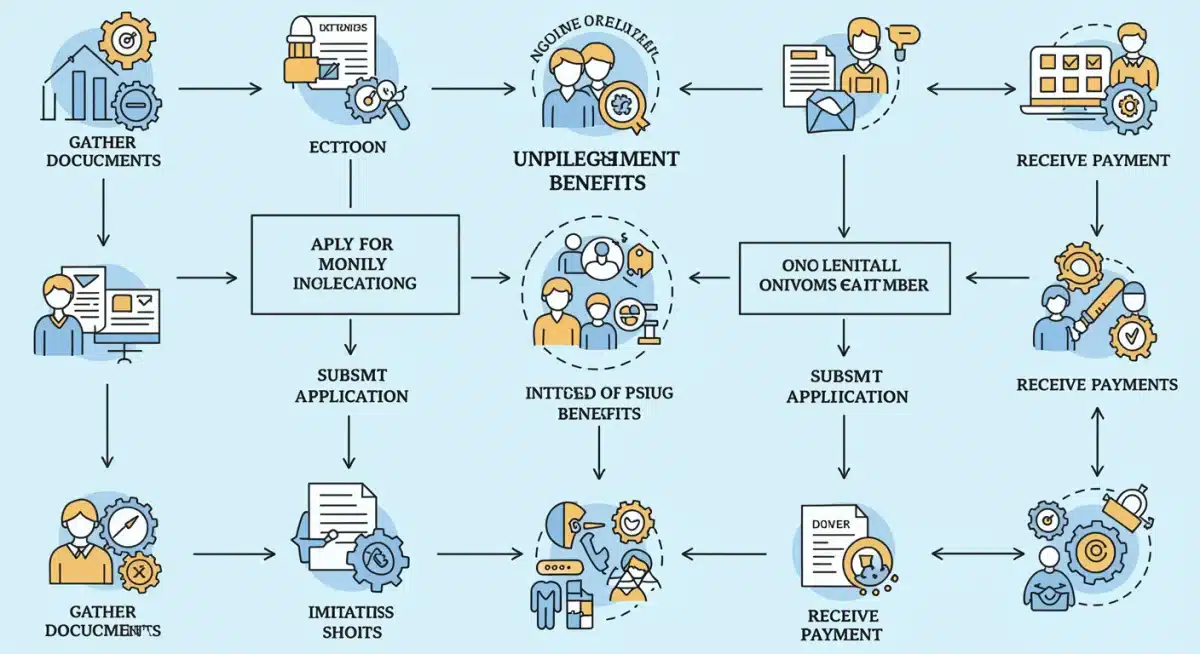
After submitting your application, you will typically receive a confirmation and instructions on what to expect next. This might include information about your weekly benefit amount, the duration of benefits, and requirements for weekly or bi-weekly certifications. Pay close attention to these instructions.
In summary, the first month is all about preparation and prompt action. By gathering the right documents and meticulously completing your application, you set yourself up for a more efficient and successful claim for unemployment benefits in 2026.
Month 2: certifications and job search requirements
Once your initial claim is filed and potentially approved, the second month shifts focus to maintaining your eligibility through consistent reporting and active job searching. This phase is critical as continued benefits are contingent upon fulfilling these ongoing requirements.
Many individuals mistakenly believe that once approved, benefits automatically continue. However, states require regular certifications to verify ongoing eligibility and active participation in the job market, making this month particularly important for compliance.
Understanding weekly or bi-weekly certifications
To continue receiving unemployment benefits, you must typically complete a certification (often weekly or bi-weekly) with your state’s unemployment agency. During this process, you will answer questions about your availability for work, earnings from any part-time employment, and your job search activities.
- Accuracy is Key: Always answer truthfully. Providing false information can lead to severe penalties, including benefit disqualification and repayment requirements.
- Reporting Earnings: If you perform any work or earn any income, no matter how small, you must report it. Even volunteer work or odd jobs can impact your benefit amount.
- Timeliness: Submit your certifications on time. Missing deadlines can result in delayed payments or even a temporary suspension of benefits.
Many states now offer online portals for these certifications, making the process relatively straightforward. However, it is your responsibility to understand and meet these reporting obligations.
Active job search mandates
A core requirement for receiving unemployment benefits is that you must be able and available to work, and actively seeking employment. States have specific definitions of what constitutes an ‘active job search’.
This often involves documenting a certain number of job contacts each week, such as applying for positions, attending job fairs, or participating in approved training programs. Keep detailed records of all your job search activities, including the date of contact, employer name, position applied for, and the outcome. This documentation will be invaluable if your eligibility is ever questioned.
The second month establishes a routine of compliance and proactive job seeking. By diligently completing certifications and maintaining thorough records of your job search, you ensure a smooth continuation of your unemployment benefits in 2026. This consistent effort is paramount to avoiding interruptions in your financial support.
Month 3: appeals, extensions, and strategic planning
As you enter the third month, you might face different scenarios, such as a benefit denial, the need for an extension, or the desire to strategically plan for your future. This stage requires a proactive approach to address any issues and to make the most of your remaining benefit period.
Even if your claim is proceeding smoothly, it’s wise to consider the upcoming end of your benefit period and what steps you can take to transition back into employment or explore alternative support systems.
Understanding the appeals process
If your unemployment benefits claim is denied, or if you disagree with a decision regarding your benefits, you have the right to appeal. The appeals process varies by state but generally involves several stages.
- Initial Appeal: Typically, you must file an appeal within a specific timeframe (e.g., 10-30 days) after receiving a denial notice. This often involves submitting a written request for a hearing.
- Hearing: An administrative law judge or hearing officer will review your case, and you will have an opportunity to present your evidence and arguments. Employers also have the right to participate.
- Further Appeals: If unsatisfied with the hearing decision, you may have options for further appeals to higher review boards or even state courts.
It is highly advisable to gather all relevant documentation and consider seeking legal advice or assistance from advocacy groups if you decide to appeal. Understanding the grounds for denial and presenting a strong case is essential.
Exploring benefit extensions and other aid
Standard unemployment benefits typically last for 26 weeks, though this can vary by state. In times of high unemployment or economic downturns, federal or state-specific extensions might become available. It’s crucial to stay informed about these possibilities.
Beyond unemployment insurance, explore other forms of assistance. This could include food assistance programs, housing aid, or utility assistance. Many local and federal programs are designed to support individuals and families experiencing financial hardship.
The third month is about resilience and foresight. By understanding your appeal rights, exploring potential extensions, and investigating other support systems, you can effectively navigate challenges and prepare for your future, even as your unemployment benefits in 2026 period draws to a close.
Maximizing your unemployment benefits in 2026
Beyond simply receiving benefits, there are several strategies you can employ to maximize the impact of your unemployment claims. This involves careful planning, diligent record-keeping, and proactive engagement with available resources.
Consider your unemployment period not just as a time of uncertainty, but also as an opportunity to reassess your career goals, acquire new skills, and strengthen your professional network.
Strategic job search techniques
While fulfilling job search requirements, optimize your efforts to increase your chances of re-employment. This means more than just sending out resumes; it involves a strategic approach to finding your next role.
- Networking: Connect with former colleagues, industry contacts, and professional organizations. Many jobs are found through personal connections.
- Skill Development: Utilize online courses, workshops, or community college programs to acquire new skills or refresh existing ones. Some states may even allow you to continue receiving benefits while enrolled in approved training.
- Tailored Applications: Customize your resume and cover letter for each job application to highlight relevant skills and experience. Generic applications are less effective.
Treat your job search as a full-time job. Dedicate specific hours each day to searching, applying, and networking. This structured approach can yield better results and demonstrate your commitment to returning to work.
Financial planning during unemployment
Unemployment benefits are temporary, so managing your finances wisely during this period is paramount. Create a detailed budget to track your income and expenses, prioritizing essential outlays.
Explore options for reducing discretionary spending and consider negotiating with creditors if you anticipate difficulty making payments. Building a small emergency fund, if possible, can also provide an additional layer of security. The goal is to stretch your benefits as far as possible while focusing on re-employment.
Maximizing your unemployment benefits in 2026 involves a dual focus: optimizing your job search for a quicker return to work and prudently managing your finances. These combined efforts ensure that the benefits serve their intended purpose as a temporary bridge to your next career opportunity.
Potential challenges and how to overcome them
While the process of claiming unemployment benefits is designed to be supportive, claimants may encounter various challenges. Being prepared for these obstacles can help you navigate them more effectively and minimize disruptions to your benefits.
From technical glitches in online systems to disputes with former employers, understanding common pitfalls allows for a more resilient approach to your claim.
Dealing with technical issues and delays
Online application portals and certification systems can sometimes experience technical difficulties. Furthermore, state unemployment offices can become overwhelmed during periods of high claim volume, leading to processing delays.
- Document Everything: Keep screenshots of error messages, confirmation numbers, and a log of all communications with the unemployment office, including dates, times, and names of representatives.
- Follow Up Persistently: If you experience delays, don’t hesitate to follow up. Use official contact channels, but be prepared for potentially long wait times.
- Seek Assistance: If you’re struggling with the online system, check if your state offers in-person assistance or specific helplines for technical support.
Patience and persistence are key when facing these types of challenges. Your detailed records will be invaluable if you need to escalate an issue.
Employer disputes and miscommunications
Sometimes, a former employer might contest your eligibility for benefits, perhaps by claiming you were fired for misconduct or quit voluntarily without good cause. This can lead to a hearing or an investigation.
If an employer disputes your claim, you will typically receive a notification and an opportunity to present your side of the story. Provide clear, concise, and truthful information, backed by any documentation you have (e.g., performance reviews, termination letters, emails). Understanding your rights and having your facts straight can significantly improve your chances of a favorable outcome.
Overcoming challenges in claiming unemployment benefits in 2026 requires a combination of preparedness, meticulous record-keeping, and effective communication. By anticipating potential hurdles, you can respond proactively and ensure your claim remains on track.
Future outlook and adapting to changes in 2026
The landscape of unemployment benefits is not static; it evolves with economic conditions, legislative changes, and technological advancements. Looking ahead to 2026, claimants should remain adaptable and informed about potential shifts that could impact their eligibility or benefits.
Staying current with policy updates and understanding how broader economic trends might influence unemployment programs is crucial for informed decision-making.
Anticipated policy shifts and economic impacts
While specific legislative changes for 2026 cannot be predicted with certainty, it’s reasonable to anticipate ongoing discussions around unemployment insurance modernization, potential federal standards, and how benefits adapt to the gig economy and remote work trends. Economic forecasts, such as inflation rates and labor market tightness, could also influence benefit levels and durations.
Keep an eye on official government announcements from both federal and state departments of labor. Subscribing to newsletters or following reputable news sources focused on labor policy can provide timely updates. Understanding these broader trends helps you contextualize your own situation and anticipate adjustments.
Leveraging community resources and support networks
Beyond official unemployment benefits, a robust network of community resources exists to support individuals during periods of job loss. These resources can complement your benefits and provide crucial assistance.
- Workforce Development Centers: These centers often offer free services such as resume writing assistance, interview coaching, and access to job listings.
- Non-profit Organizations: Many local charities and non-profits provide assistance with food, housing, mental health support, and job search guidance.
- Professional Associations: Staying connected with your professional community can offer networking opportunities, mentorship, and emotional support during your job search.
Embracing a proactive and informed approach to the future is vital. By staying abreast of policy changes and actively leveraging community support, you can navigate the complexities of unemployment benefits in 2026 and position yourself for a successful return to the workforce.
| Key Stage | Brief Description |
|---|---|
| Month 1: Initial Application | Gather documents, check eligibility, and submit your claim promptly to avoid delays. |
| Month 2: Certifications | Regularly complete weekly/bi-weekly certifications and actively document job search efforts. |
| Month 3: Appeals & Planning | Understand appeal rights, explore extensions, and strategize for future employment or aid. |
| Maximizing Benefits | Employ strategic job search techniques and prudent financial planning to extend support. |
Frequently asked questions about unemployment benefits in 2026
Eligibility typically requires you to have earned sufficient wages in a base period, lost your job through no fault of your own, and be able and available to work while actively seeking new employment. Specific monetary and job separation reasons vary by state, so always check your state’s Department of Labor guidelines for precise details.
You should apply as soon as possible after becoming unemployed. Benefits are usually not retroactive to the date of job loss but rather to the date you file your claim. Prompt application helps ensure you don’t miss out on potential weeks of financial support.
If your claim is denied, you have the right to appeal the decision. This typically involves filing a written appeal within a specific timeframe, followed by a hearing where you can present your case. It’s advisable to gather all relevant documents and consider seeking legal advice.
Standard unemployment benefits usually last up to 26 weeks, though this can vary by state. Federal or state-specific extensions might become available during periods of high unemployment or economic downturns. It’s important to monitor official government announcements for any updates on extended benefits programs.
To continue receiving benefits, you must typically complete weekly or bi-weekly certifications, accurately report any earnings, and actively search for new employment. States have specific requirements for job search activities, which often involve documenting a certain number of contacts or applications each week.
Conclusion
Successfully navigating unemployment benefits in 2026 requires a diligent, informed, and proactive approach. From the initial application and understanding eligibility criteria to consistently meeting certification requirements and strategically planning your job search, each step plays a vital role. By staying informed about potential policy changes, diligently managing your finances, and leveraging available community resources, you can effectively utilize this critical safety net. Remember, unemployment is a temporary phase, and with careful planning, you can bridge the gap to your next career opportunity.