Best High-Yield Savings Accounts 2025: 5.0% APY for Emergency Funds
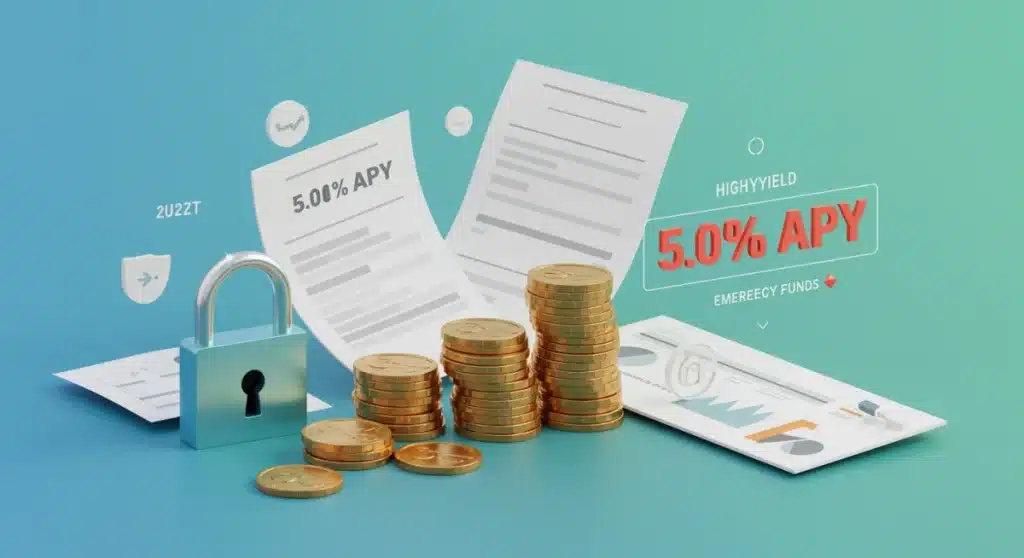
Securing an emergency fund in 2025 requires identifying high-yield savings accounts offering 5.0% APY or more, focusing on competitive rates, minimal fees, and FDIC insurance for optimal financial safety and growth.
In today’s dynamic financial landscape, finding the right place for your hard-earned money, especially an emergency fund, is paramount. With inflation often eroding purchasing power, securing a savings vehicle that offers a competitive yield is more crucial than ever. This article delves into comparing high-yield savings accounts for 2025, specifically looking for options that provide a 5.0% APY or higher, ensuring your emergency fund not only stays safe but also grows substantially.
Understanding High-Yield Savings Accounts (HYSA)
High-Yield Savings Accounts, or HYSAs, are savings accounts that typically offer significantly higher interest rates than traditional savings accounts. These accounts are usually offered by online-only banks or credit unions, which have lower overhead costs and can pass those savings on to customers in the form of better rates. For your emergency fund, an HYSA is often the ideal choice because it combines liquidity with attractive returns, ensuring your money is accessible when needed while still working for you.
The interest rate, often expressed as Annual Percentage Yield (APY), is a critical factor when choosing an HYSA. A 5.0% APY, for instance, means your money grows by 5% over a year, taking into account compounding interest. This compounding effect is what truly differentiates HYSAs from standard savings accounts over time. Understanding how APY is calculated and how often interest is compounded can significantly impact your overall earnings.
Key Benefits of HYSAs for Emergency Funds
HYSAs offer several compelling advantages for holding an emergency fund. They provide a balance between security and growth, making them a superior option compared to traditional savings or checking accounts. The higher interest rates mean your money isn’t just sitting idle; it’s actively contributing to your financial well-being.
- Higher Returns: Earn significantly more interest than conventional savings accounts.
- Liquidity: Funds are readily accessible, typically within 1-3 business days, for unexpected expenses.
- FDIC Insurance: Most reputable HYSAs are FDIC-insured up to $250,000 per depositor, per institution, providing peace of mind.
- Low Fees: Many online HYSAs come with no monthly maintenance fees, maximizing your earnings.
In conclusion, HYSAs are a powerful tool for anyone looking to optimize their emergency fund. Their blend of high interest, easy access, and robust insurance makes them an almost indispensable component of a sound financial strategy, especially when aiming for a 5.0% APY or higher.
Factors to Consider Beyond APY
While a high APY is undoubtedly attractive, it shouldn’t be the sole criterion for selecting a high-yield savings account. Several other factors play a crucial role in determining the overall value and suitability of an HYSA for your specific needs. Understanding these nuances can help you avoid unexpected fees or limitations that could diminish your returns.
For instance, some accounts might offer a promotional APY that eventually reverts to a lower rate. It’s essential to read the fine print and understand the long-term rate structure. Additionally, minimum balance requirements, transaction limits, and whether the bank offers essential digital tools are all important considerations. A bank with excellent customer service can also be invaluable, especially when you need quick assistance with your funds.
Hidden Fees and Account Requirements
Even in a high-yield environment, fees can chip away at your earnings. Some banks might charge monthly maintenance fees if you don’t meet a certain minimum balance, while others might impose fees for excessive withdrawals or transfers. It’s vital to scrutinize the fee schedule before opening an account.
- Monthly Maintenance Fees: Check for fees that can be waived by maintaining a minimum balance or setting up direct deposit.
- Transaction Limits: Be aware of federal regulations (Regulation D) limiting certain withdrawals and transfers to six per month, though many banks have removed or loosened this in practice.
- Minimum Opening Deposit: Some HYSAs require a specific amount to open the account, which might be a barrier for some savers.
- Minimum Balance to Earn APY: Ensure you understand if a minimum balance is required to qualify for the stated APY.
By carefully evaluating these factors alongside the APY, you can make a more informed decision that aligns with your financial goals and usage patterns. A truly beneficial HYSA offers not just a high rate but also transparency and flexibility.
Top Banks Offering 5.0% APY or Higher in 2025
As we move into 2025, several financial institutions are expected to lead the pack in offering competitive high-yield savings accounts with APYs at or above 5.0%. These banks often leverage their online-only models to provide superior rates and lower fees compared to their brick-and-mortar counterparts. Identifying these top performers is key to maximizing the growth of your emergency fund.
While specific rates can fluctuate, general trends suggest that challenger banks and established online divisions of larger banks will continue to be primary sources for these attractive yields. It’s always recommended to check the most current rates directly on the bank’s website as they can change frequently based on market conditions and Federal Reserve policy.
Leading Contenders for High APY
Based on current market projections and historical performance, certain institutions are likely to be strong contenders in the 5.0% APY or higher bracket for 2025. These often include a mix of well-known online banks and newer fintech players. Their offerings typically combine strong rates with user-friendly digital platforms.
- Online-Only Banks: Often have the most competitive rates due to lower operational costs.
- Credit Unions: Member-owned institutions that can sometimes offer higher dividends to their members.
- Fintech Platforms: Innovative platforms that partner with FDIC-insured banks to offer attractive rates and modern banking experiences.
When evaluating these options, look beyond just the raw APY. Consider the bank’s reputation, customer service reviews, and the ease of managing your account online or through a mobile app. These aspects contribute significantly to the overall banking experience and the reliability of your emergency fund.
Setting Up and Managing Your High-Yield Account
Opening a high-yield savings account is a straightforward process, but effective management is crucial to maximize its benefits. Once you’ve selected an account with a desirable APY and favorable terms, understanding the setup process and ongoing management strategies will ensure your emergency fund is working optimally for you. Most online banks have streamlined their application processes to be quick and entirely digital.
Typically, you’ll need to provide personal information, such as your Social Security number, address, and employment details, along with a method to fund the initial deposit. Linking your new HYSA to an existing checking account for easy transfers is a common and recommended step. This ensures seamless access to your funds when an emergency arises.
Best Practices for Account Management
To get the most out of your high-yield savings account, adopt a few key management practices. Regularly monitoring your account, setting up automatic transfers, and understanding withdrawal procedures are all part of responsible financial stewardship. These habits help ensure your emergency fund remains robust and accessible.
- Automate Savings: Set up recurring transfers from your checking account to your HYSA to consistently build your emergency fund.
- Monitor Rates: Keep an eye on market rates. If your bank’s APY drops significantly, consider transferring funds to a more competitive account.
- Understand Withdrawal Limits: While HYSAs offer liquidity, be aware of any daily or monthly transfer limits that might apply.
- Utilize Digital Tools: Take advantage of mobile apps and online banking portals for easy account access and management.
By diligently setting up and actively managing your high-yield savings account, you ensure that your emergency fund is not only secure but also growing efficiently, providing a strong financial safety net for the future.
The Role of FDIC Insurance and Security
When entrusting your emergency fund to any financial institution, security should be a top priority. This is where FDIC insurance plays an indispensable role. The Federal Deposit Insurance Corporation (FDIC) is an independent agency of the United States government that protects depositors of insured banks against the loss of their deposits if an FDIC-insured bank fails. This insurance is a cornerstone of confidence in the U.S. banking system.
For high-yield savings accounts, ensuring your chosen bank is FDIC-insured up to the standard maximum deposit insurance amount of $250,000 per depositor, per insured bank, for each account ownership category, is non-negotiable. This protection means that even if the bank faces financial difficulties, your principal and accrued interest are safeguarded, providing unparalleled peace of mind for your emergency savings.
Beyond FDIC: Bank Security Measures
While FDIC insurance covers bank failure, robust cybersecurity measures are equally important to protect your account from fraud and unauthorized access. Reputable online banks offering high-yield savings accounts invest heavily in advanced security protocols to safeguard customer data and transactions. These measures are crucial in today’s digital banking environment.
- Encryption: Banks use strong encryption to protect your data during online transactions and storage.
- Multi-Factor Authentication (MFA): An added layer of security, requiring more than just a password to access your account.
- Fraud Monitoring: Advanced systems continuously monitor for suspicious activity to prevent unauthorized transactions.
- Secure Browsing: Ensuring the bank’s website uses HTTPS and other secure browsing protocols.
Ultimately, a secure high-yield savings account combines the federal protection of FDIC insurance with the bank’s proactive security measures. This dual layer of defense is essential for maintaining the integrity and safety of your emergency fund, allowing you to focus on its growth with confidence.
Future Outlook for High-Yield Rates in 2025
Predicting interest rate movements with absolute certainty is challenging, yet understanding the economic factors that influence high-yield savings rates can help savers anticipate potential changes in 2025. The Federal Reserve’s monetary policy, inflation trends, and overall economic growth significantly impact the APYs offered by banks. As we look ahead, a nuanced perspective on these elements is crucial for informed financial planning.
Historically, when the Federal Reserve raises its benchmark interest rate, banks tend to follow suit by increasing the rates on their savings products. Conversely, periods of economic slowdown or rate cuts often lead to lower savings rates. Staying informed about economic forecasts and central bank announcements can provide valuable insights into the probable trajectory of high-yield savings rates.
Economic Influences on APY
Several macroeconomic indicators directly influence the competitiveness of high-yield savings accounts. These factors create a complex web of interactions that ultimately determine the rates banks are willing and able to offer to attract deposits. Understanding these influences can help you anticipate market shifts.
- Federal Reserve Policy: Changes in the federal funds rate have a direct impact on deposit rates.
- Inflation Rates: Banks often adjust rates to keep pace with or exceed inflation, preserving purchasing power.
- Economic Growth: A strong economy might lead to higher demand for loans, prompting banks to offer better deposit rates to fund lending.
- Market Competition: Fierce competition among online banks can drive rates higher as they vie for customer deposits.
While a 5.0% APY might be achievable or even exceeded by some institutions in 2025, it’s wise to remain flexible and regularly assess the market. Diversifying your savings or considering other short-term investment options could also be prudent strategies if rates begin to decline. The key is continuous monitoring and adaptability to prevailing economic conditions.
| Key Aspect | Brief Description |
|---|---|
| APY Comparison | Focus on finding accounts offering 5.0% APY or higher to maximize emergency fund growth. |
| Fees & Requirements | Evaluate monthly fees, minimum balances, and transaction limits to avoid diminishing returns. |
| FDIC Insurance | Ensure your chosen bank is FDIC-insured up to $250,000 for deposit security. |
| Account Management | Utilize automation and digital tools for efficient monitoring and growth of your savings. |
Frequently Asked Questions About High-Yield Savings Accounts
A high-yield savings account (HYSA) offers significantly higher interest rates (APY) than traditional savings accounts, typically due to lower overhead costs of online banks. This means your money grows faster while remaining liquid and FDIC-insured, making it ideal for emergency funds. Regular savings accounts usually offer minimal interest.
Yes, a 5.0% APY is realistic and achievable for high-yield savings accounts in 2025, particularly from online-only banks or credit unions. Rates are influenced by Federal Reserve policy and market competition, so it’s essential to monitor current offerings from various institutions to find the best available rates.
Yes, reputable high-yield savings accounts are very safe. Most are FDIC-insured up to $250,000 per depositor, per institution, protecting your deposits in case of bank failure. Beyond FDIC, banks employ robust cybersecurity measures like encryption and multi-factor authentication to secure your account from fraud.
While many HYSAs boast low or no fees, always check for potential charges. These can include monthly maintenance fees (often waivable), excessive transaction fees beyond federal limits, or fees for specific services like wire transfers. Understanding the fee schedule helps maximize your net earnings from the high APY.
To choose the best HYSA, compare APYs, ensuring it’s 5.0% or higher, and verify FDIC insurance. Also, consider fees, minimum balance requirements, ease of access to funds, and customer service quality. Read reviews and look for banks with strong digital platforms for convenient management of your emergency fund.
Conclusion
Navigating the landscape of high-yield savings accounts in 2025 offers a significant opportunity to grow your emergency fund effectively. By prioritizing accounts offering a 5.0% APY or higher, while also meticulously evaluating factors such as fees, minimum balance requirements, and the crucial protection of FDIC insurance, you can make an informed decision. The continuous evolution of economic conditions necessitates vigilance and adaptability in managing your savings, ensuring your financial safety net is robust, accessible, and poised for optimal growth.