Federal Student Aid 2026-2027: Key Changes & What Students Need to Know

5 Key Changes in Federal Student Aid for the 2026-2027 Academic Year: What Every US Student Needs to Know Now (RECENT UPDATES)
The landscape of higher education finance is ever-evolving, and staying informed is paramount for prospective and current students alike. As we look ahead to the 2026-2027 academic year, significant modifications to Federal Student Aid programs are on the horizon. These changes, stemming from ongoing efforts to simplify the application process, expand eligibility, and ensure equitable access to education, will undoubtedly impact how millions of US students fund their college journeys. Understanding these updates now is not just beneficial; it’s essential for effective financial planning and maximizing your chances of securing the aid you need.
This comprehensive guide delves into the five most crucial changes to federal student aid 2026, offering a detailed breakdown of what they entail and how they might affect you. From the intricacies of the FAFSA to adjustments in Pell Grant eligibility and the structure of federal loan programs, we’ll equip you with the knowledge to navigate these new regulations with confidence. Don’t wait until the last minute; proactive engagement with these changes can make a substantial difference in your educational pursuits.
Understanding the Evolution of Federal Student Aid Programs
Before we dive into the specifics of the 2026-2027 academic year, it’s helpful to acknowledge the broader context of federal student aid reforms. The federal government consistently reviews and revises its aid programs with several key objectives in mind: increasing accessibility, simplifying processes, and ensuring that financial aid effectively addresses the rising costs of higher education. These goals often lead to legislative changes, policy adjustments, and technological overhauls that directly influence the student experience. The upcoming changes for federal student aid 2026 are a continuation of these efforts, building upon recent amendments and setting the stage for future iterations of financial support.
The importance of federal student aid cannot be overstated. It serves as the bedrock for countless students pursuing post-secondary education, enabling them to attend colleges and universities that might otherwise be financially out of reach. This aid comes in various forms, including grants (which do not need to be repaid), loans (which must be repaid with interest), and work-study programs. Each component plays a vital role in creating a robust support system for students from diverse socioeconomic backgrounds. As such, any significant alteration to these programs warrants careful attention and preparation.
The journey to higher education is often fraught with financial challenges, and the complexities of financial aid applications can add to this burden. Recognizing this, many of the changes for federal student aid 2026 aim to streamline the application process and make eligibility criteria more transparent. This is a welcome development for students and families who often feel overwhelmed by the paperwork and nuanced requirements. By demystifying these changes, we hope to empower you to approach your financial aid applications with greater clarity and less stress.
Key Change 1: The Simplified FAFSA and Its Impact on Federal Student Aid 2026
One of the most significant and far-reaching changes for the 2026-2027 academic year revolves around the Free Application for Federal Student Aid (FAFSA). While significant FAFSA simplifications were introduced in prior years, the 2026-2027 cycle will see further refinements and the full implementation of certain provisions, aiming to make the application even more user-friendly and efficient. The goal is to reduce the time and effort required to complete the form, thereby encouraging more students to apply for aid.
What’s New with the FAFSA?
The simplified FAFSA is designed to be shorter and more intuitive. It will likely continue to integrate direct data exchange with the IRS, which began in earlier cycles, to automatically retrieve tax information for applicants and their parents/spouses. This feature significantly reduces the need for manual data entry and minimizes errors, making the process faster and less intimidating. For federal student aid 2026, expect this integration to be even more seamless, potentially covering a wider range of tax scenarios.
Furthermore, the terminology used in the FAFSA has been updated to be more understandable. Concepts like the Expected Family Contribution (EFC) have been replaced with the Student Aid Index (SAI). This change is more than just semantic; the SAI calculation methodology is different, and it’s designed to be a more accurate reflection of a student’s financial need. Understanding the SAI is crucial because it directly influences the amount of federal student aid a student is eligible to receive.
Implications for Students and Families
For students, a simpler FAFSA means less time spent on the application and a reduced likelihood of making mistakes that could delay aid processing. This is particularly beneficial for first-generation college students or those whose families have limited experience with financial aid applications. For families, the streamlined process and direct IRS data retrieval can alleviate the burden of gathering extensive financial documents and manually inputting complex figures.
However, it’s important to remember that while the FAFSA is simpler, accuracy remains paramount. Students and families should still carefully review all information before submission. Additionally, the shift to the SAI calculation might result in different aid eligibility outcomes for some students compared to previous years. It’s advisable to familiarize yourself with the new SAI methodology as details emerge closer to the application cycle.
The simplified FAFSA for federal student aid 2026 is a positive step towards making college more accessible, but staying informed about the specifics of its implementation will be key to a successful application.
Key Change 2: Adjustments to Pell Grant Eligibility and Maximum Awards
Pell Grants are a cornerstone of federal student aid, providing need-based grants to undergraduate students who display exceptional financial need. These grants do not have to be repaid, making them an incredibly valuable resource for students from low-income backgrounds. For the 2026-2027 academic year, expect further adjustments to Pell Grant eligibility criteria and potentially the maximum award amounts, continuing the trend of expanding access.
Expanded Eligibility for Pell Grants
Recent legislative changes have aimed to expand Pell Grant eligibility, and these expansions are expected to be fully realized and potentially further refined for federal student aid 2026. This means that more students, particularly those whose families fall within certain income thresholds, may become eligible for Pell Grants even if they weren’t in previous years. The new SAI calculation plays a significant role here, as it is designed to more accurately identify students with true financial need.
One notable aspect of the expanded eligibility is often tied to the federal poverty guidelines. Students whose family incomes fall below a certain percentage of the federal poverty level may automatically qualify for a maximum Pell Grant, regardless of other factors. This provision is intended to provide a clear pathway to significant financial support for the most financially vulnerable students.
Potential Changes to Maximum Award Amounts
While the exact maximum Pell Grant award for the 2026-2027 academic year will be determined by congressional appropriations, there’s an ongoing push to increase the maximum award to keep pace with rising tuition costs. Any increase in the maximum Pell Grant would provide a substantial boost to students’ ability to cover educational expenses, reducing their reliance on loans. Students should monitor official announcements from the Department of Education regarding these amounts as the application cycle approaches.

Impact on Students
The expanded eligibility and potential increase in maximum awards for Pell Grants are incredibly positive developments for students. They mean that more students will have access to non-repayable aid, significantly reducing their overall cost of attendance and potentially lessening the need to take out federal student loans. This can lead to lower student debt burdens upon graduation, allowing graduates to pursue their career goals with greater financial freedom. For students considering higher education, understanding these enhanced Pell Grant opportunities is a critical component of planning for federal student aid 2026.
Key Change 3: Revisions to Federal Student Loan Programs
Federal student loans are another crucial component of federal student aid 2026, offering students and parents access to funding with generally more favorable terms than private loans. For the 2026-2027 academic year, expect continued revisions to these loan programs, focusing on simplifying repayment options, adjusting interest rates, and potentially modifying loan limits.
Streamlined Repayment Plans
The Department of Education has been consistently working to simplify and improve income-driven repayment (IDR) plans. These plans are designed to make loan repayment more manageable by adjusting monthly payments based on a borrower’s income and family size. For federal student aid 2026, we anticipate further streamlining of these IDR plans, making them easier to understand and enroll in. This could include fewer plan options but with more generous terms, or clearer pathways to forgiveness after a certain number of qualifying payments.
The goal is to prevent loan defaults and provide a safety net for borrowers experiencing financial hardship. Students taking out new federal loans for 2026-2027 should pay close attention to updates on IDR plans, as these can significantly impact their future financial well-being.
Potential Adjustments to Interest Rates and Loan Limits
Federal student loan interest rates are typically set annually based on market conditions and congressional action. While it’s difficult to predict specific rates for 2026-2027 this far in advance, students should be aware that these rates can fluctuate. Historically, federal loan rates are generally lower than private loan rates and come with fixed interest, providing stability for borrowers. Any adjustments will be announced by the Department of Education prior to the start of the academic year.
Similarly, federal loan limits (the maximum amount a student can borrow each year and in total) are periodically reviewed. While major overhauls are less frequent, minor adjustments to these limits are possible. These limits vary based on a student’s dependency status and their academic year. Understanding these limits is crucial for students to accurately budget their educational costs and determine their borrowing needs for federal student aid 2026.
Borrower Protections and Support
In recent years, there has been an increased focus on borrower protections, including improvements to loan servicing and clearer communication regarding repayment options and potential forgiveness programs. Students who take out federal loans for 2026-2027 can expect continued emphasis on these protections, ensuring they have access to resources and support throughout their repayment journey. This includes transparent information about loan terms, borrower rights, and avenues for assistance if they encounter difficulties.
Key Change 4: Redefined Dependency Status and Its Implications
The determination of a student’s dependency status is a critical factor in the FAFSA process, as it dictates whether parental financial information must be included in the application. For federal student aid 2026, there may be subtle but important refinements to the criteria used to establish dependency, impacting a subset of applicants.
Clarifying Dependency Questions
While the core questions that determine dependency (e.g., age, marital status, enrollment in graduate programs, military service, emancipation, homelessness) are likely to remain, there might be further clarifications or adjustments to how these questions are phrased or interpreted. The ongoing simplification efforts aim to reduce ambiguity and make it easier for students to correctly identify their dependency status.
For example, definitions related to homelessness or unaccompanied youth may be further refined to ensure that all eligible students can correctly claim independent status, thereby not needing to provide parental information. This can significantly impact the amount of federal student aid a student is eligible for, as independent students are often considered to have greater financial need.
Impact on Aid Eligibility
The primary impact of dependency status is on the Student Aid Index (SAI) calculation. Dependent students are required to include parental financial information, which contributes to their SAI. Independent students, on the other hand, only provide their own (and spouse’s, if applicable) financial details, typically resulting in a lower SAI and thus qualifying for more need-based aid, such as Pell Grants and subsidized loans.
Students who are on the cusp of qualifying as independent, or those whose circumstances have recently changed, should pay very close attention to the dependency questions on the 2026-2027 FAFSA. Incorrectly answering these questions can lead to either delays in aid processing or a miscalculation of eligible aid. If there’s any doubt, students should consult with their school’s financial aid office for guidance. Proactive engagement with these criteria for federal student aid 2026 can be crucial for maximizing aid opportunities.
Key Change 5: Enhanced Support for Special Circumstances and Professional Judgment
Life circumstances can be unpredictable, and the standard federal student aid formulas don’t always capture the full financial picture of every student. Recognizing this, an important and ongoing aspect of federal student aid is the provision for special circumstances and the use of professional judgment by financial aid administrators. For federal student aid 2026, expect a continued emphasis and potentially enhanced guidelines for these provisions.
What are Special Circumstances?
Special circumstances refer to financial situations that are not reflected on the FAFSA due to changes that occurred after the tax year used for the application. Examples include job loss, significant medical expenses, divorce or separation, death of a parent, or other unforeseen financial hardships. When these events occur, a student or family’s ability to contribute to educational costs may be severely impacted, but the FAFSA might not reflect this reality.
Professional Judgment and Its Role
Financial aid administrators have the authority to use "professional judgment" to adjust a student’s financial aid eligibility based on these special circumstances. This involves reviewing documentation provided by the student and making a professional assessment of their actual financial need. For federal student aid 2026, there may be clearer guidelines or expanded training for financial aid offices to ensure consistent and fair application of professional judgment across institutions.
How Students Can Utilize This Provision
If your family’s financial situation has changed significantly since the tax year reported on your FAFSA, it is absolutely crucial to contact the financial aid office at each school you are considering. You should be prepared to explain your situation and provide documentation to support your claim (e.g., termination letters, medical bills, divorce decrees). Do not assume that the FAFSA automatically knows about your changed circumstances.
The ability to appeal for professional judgment is a vital safeguard within the federal student aid system, ensuring that students facing genuine financial hardship are not unfairly penalized by a formulaic application process. Staying informed about how to leverage this provision is a key part of effectively managing your federal student aid 2026 application.
Preparing for the 2026-2027 Academic Year: Your Action Plan
Navigating the world of federal student aid can seem daunting, but by being proactive and informed, you can significantly enhance your chances of securing the funding you need. Here’s an action plan to help you prepare for the 2026-2027 academic year:
- Stay Informed: Regularly check the official Federal Student Aid website and your prospective college’s financial aid pages for the latest updates regarding the 2026-2027 FAFSA and federal student aid policies. Information evolves, so consistent monitoring is key.
- Gather Documents Early: Even with a simplified FAFSA, you’ll still need access to tax information (likely from the 2025 tax year for the 2026-2027 FAFSA), bank statements, and records of investments. Start organizing these documents well in advance.
- Understand the SAI: Familiarize yourself with the concept of the Student Aid Index (SAI) and how it’s calculated. While you don’t need to be an expert, understanding its purpose will help you interpret your aid offers.
- File Your FAFSA Promptly: As soon as the 2026-2027 FAFSA becomes available (typically in October of the preceding year), complete and submit it. Some aid, particularly state and institutional grants, is awarded on a first-come, first-served basis.
- Communicate with Financial Aid Offices: If you have special circumstances or any questions about your eligibility, reach out to the financial aid office at your chosen schools. They are your best resource for personalized guidance.
- Explore All Aid Options: Remember that federal student aid is just one piece of the puzzle. Also, research state aid programs, institutional scholarships, and private scholarships to cover any remaining costs.
- Budget Wisely: Even with aid, higher education is an investment. Create a realistic budget that includes tuition, fees, housing, books, and living expenses. Understand your borrowing limits and only take out what you truly need.
- Review Your Aid Offer: Once you receive your financial aid offer letters from colleges, review them carefully. Understand the difference between grants, scholarships, and loans. Don’t hesitate to ask for clarification if anything is unclear.
The Future of Federal Student Aid and Your Education
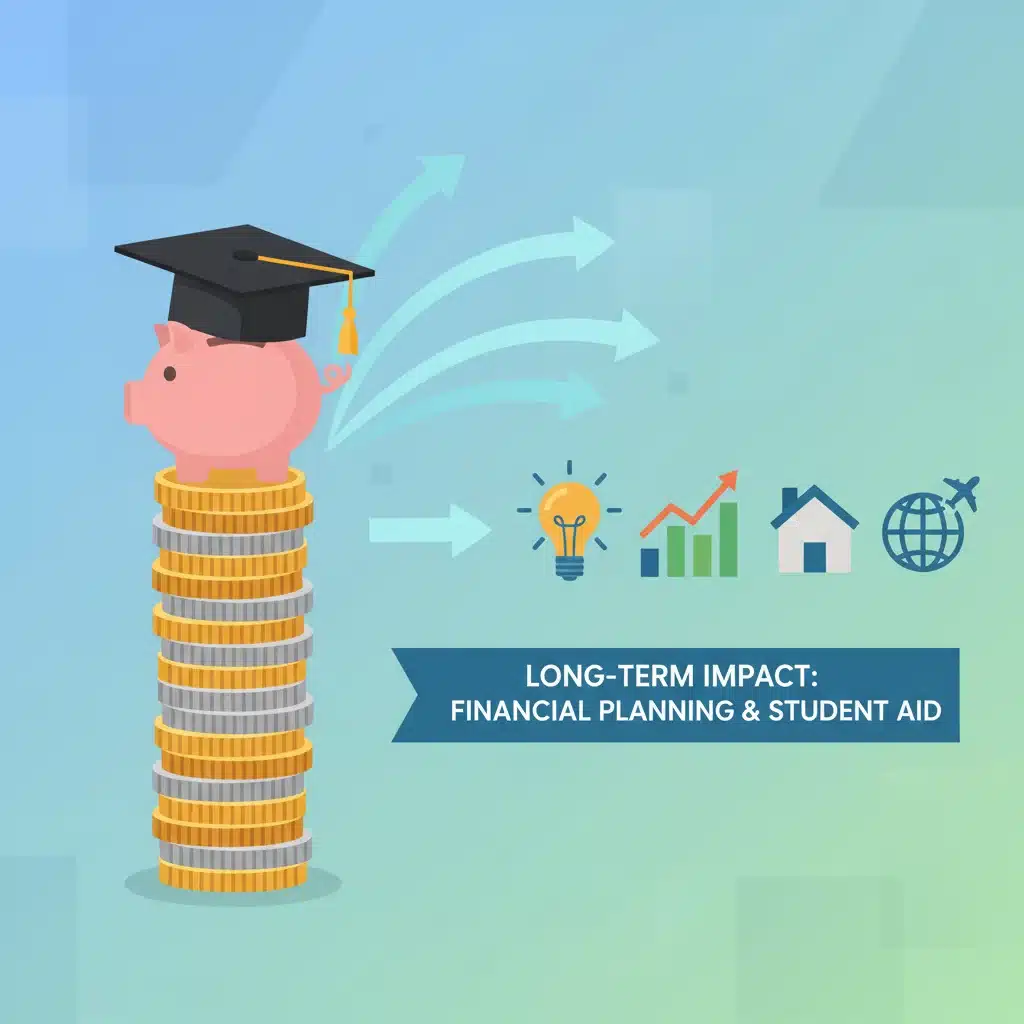
The changes to federal student aid 2026 represent an ongoing commitment to making higher education more accessible and affordable for all US students. While the specifics can sometimes feel overwhelming, the overarching goal is to streamline processes and better target aid to those who need it most. By staying informed, preparing diligently, and utilizing available resources, you can confidently navigate these changes and secure the financial backing necessary to achieve your academic aspirations.
Education is a powerful tool for personal and societal advancement, and federal student aid plays a pivotal role in ensuring that this tool is within reach for a broad spectrum of students. Embrace these updates as opportunities to better understand your financial aid landscape and to plan strategically for a successful educational journey. Your future starts now, and understanding your financial aid options is a crucial first step.